
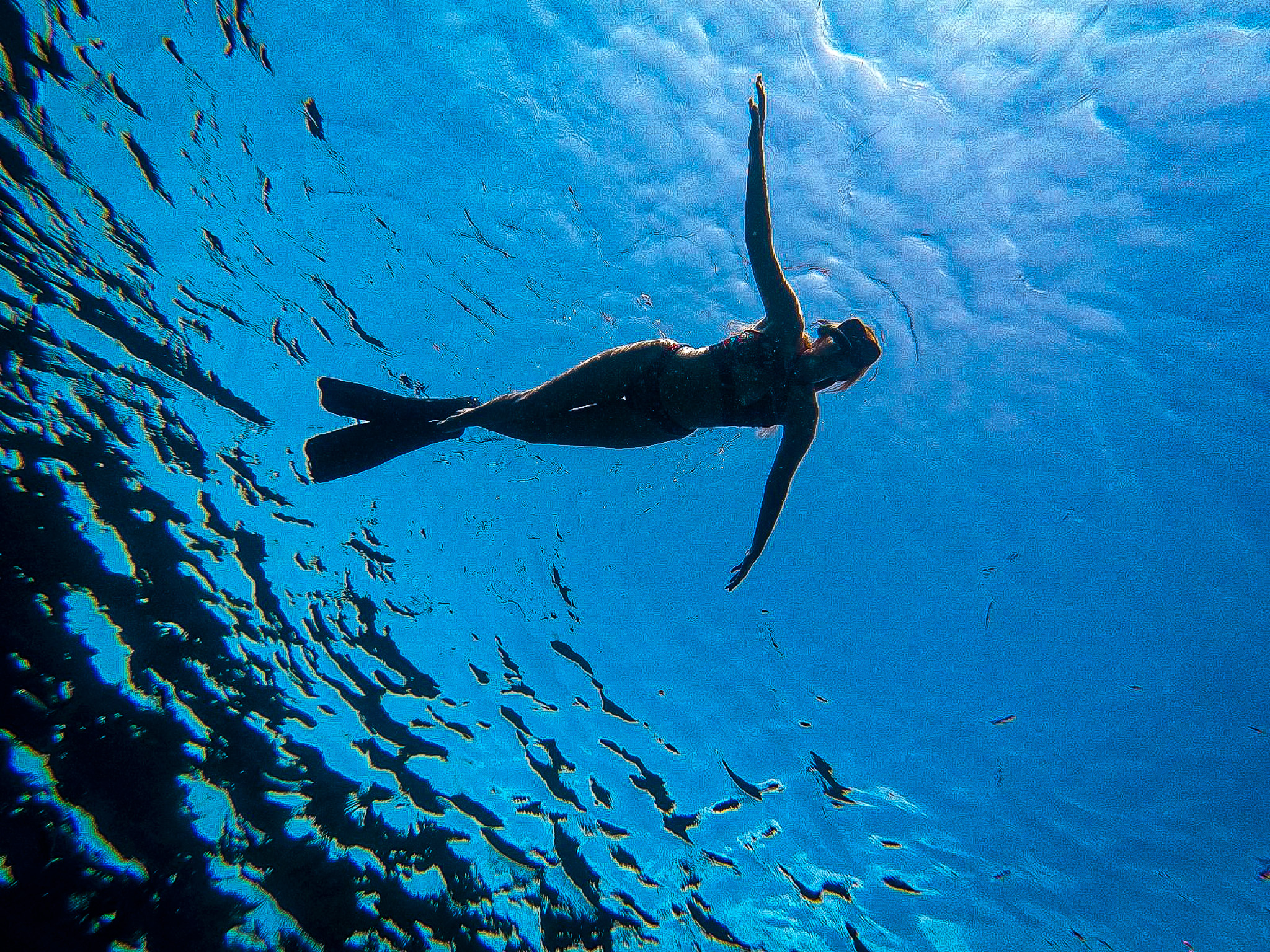
Best Snorkelling Spots in Malta, Gozo and Comino 2026 — The Complete Local Guide
Malta doesn’t get the credit it deserves as a snorkelling destination.
Most people arrive thinking of it as a history trip with good weather. Then they put a mask on for the first time in the Blue Lagoon — and realise the underwater world here is genuinely extraordinary. Water visibility of up to 30 metres. Water temperatures reaching 28-30°C in July and August. A rocky limestone coastline that creates exactly the kind of reef habitat where Mediterranean marine life thrives. And a collection of sea caves, underwater tunnels, wrecks, and hidden coves that most snorkellers — even those who have been coming to Malta for years — have never seen.
This guide covers all of it. The spots you can reach by walking down to the shore. The spots only accessible by private boat. The spots that no other guide has properly described, because writing about them requires knowing where they are — and that knowledge only comes from years on this water.
Written with the team at Outdoor Explorers Malta — a family-run operation with over 25 years of daily experience on the Maltese coastline.
Why Malta is One of Europe’s Best Snorkelling Destinations
Four things make Malta exceptional for snorkelling:
Water clarity. The Mediterranean around Malta has some of the highest visibility in the basin — typically 20-30 metres, and up to 40 metres in the clearest conditions. You can see the seabed from the surface at depths that would be completely opaque in most Northern European waters.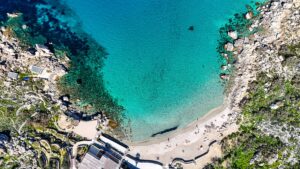
Water temperature. July and August regularly reach 29-30°C — warm enough to stay in for hours without a wetsuit. Even in May and October, when conditions are often the best overall, water temperature sits at a comfortable 20-22°C.
The coastline. Malta’s rocky limestone coast creates ideal reef habitat — formations, crevices, drop-offs, and sea caves that support a genuinely diverse range of Mediterranean marine species.
Year-round season. The snorkelling season runs from April through November. June to September is warmest. May and October offer the best visibility with fewer crowds. Winter snorkelling is possible for those who don’t mind cooler water — the Blue Lagoon in December is extraordinary and almost entirely empty.
What Marine Life Will You Actually See?
Malta is not the Maldives — there are no coral reefs, no whale sharks, no manta rays. But Mediterranean marine life is genuinely rich and varied, and Malta’s coastal waters are among the most biodiverse in the basin.
Fish — What to Expect Everywhere
- Sea bream (Awrat) — the most common fish on the entire Maltese coastline. Present at every snorkelling spot in this guide. Bold, curious, and extraordinarily responsive to food
- Damselfish — dense populations at every rocky reef and cave entrance
- Sargos — in loose shoals along rocky edges
- Salema — distinctive horizontal stripes, often in large groups near Posidonia meadows
- Bogue — frequently in open-water shoals just off the reef edge
- Wrasse family: Rainbow wrasse, ornate wrasse, and the vivid peacock wrasse — some of the most colourful fish you’ll see in Malta
- Painted comber — often found near octopus dens — a reliable indicator that an octopus is close by
- Saddled seabream and annular seabream — common throughout, recognisable by their distinctive markings
- Parrot fish — at deeper rocky reef sections and around Cominotto
- Rabbit fish — increasingly common on the south and southeast Comino coastline
- Sea bass — near the deeper cave sections
- Comber — throughout rocky reef sections
Less Common but Possible
- Moray eels — in rock crevices at almost every rocky spot
- Octopus — on reef sections, most active in early morning and more visible from August onward
- Grouper — in deeper sections and cave entrances
- Barracuda — occasionally in open water
- Scorpionfish — near the seabed, expertly camouflaged — look carefully
- Stingrays — on sandy-bottomed bays like Għajn Tuffieħa
- Seahorses — in the shallow seagrass on the east side of Santa Marija Bay, Comino
Seasonal Highlights
- Cuttlefish — March to May. They change colour in real time in front of you — one of the most extraordinary encounters in the Mediterranean
- Jellyfish — occasionally in May with west wind conditions. Full jellyfish guide here.
🍞 Local Tip — Bring White Bread
This is the single best snorkelling tip for Malta and almost no guide mentions it. Bring a small bag of white bread. Tear it into pieces and throw it into the water at the Blue Lagoon, Crystal Lagoon, or any rocky bay — and sea bream and damselfish arrive within seconds. Sometimes dozens of them, swimming directly toward your hands. Children and adults consistently say this is one of the most memorable moments of their entire Malta trip.
🐟 Local Tip — Late Afternoon for More Fish
Early morning is best for calm water and no crowds. But late afternoon from 16:00 onward is the best time for fish activity. As the water cools slightly and boat traffic reduces, fish move more actively around the reef. The golden afternoon light also creates more vivid colours underwater.
Best Snorkelling Spots — Only Accessible by Private Boat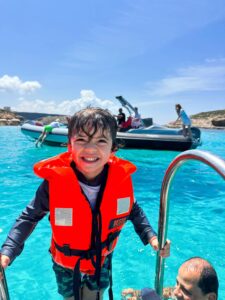
This section is what separates this guide from every other snorkelling guide written about Malta. The spots below cannot be reached by walking to a beach. They require a boat — and several require a skipper who actually knows where they are.
For snorkelling from a private boat across all these locations, see our full boat tour range here.
🔵 1. The Blue Lagoon Open Water — Comino
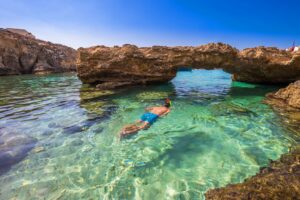
snorkel blue lagoon
Best for: Beginners to intermediate | Depth: 3-8m | Marine life: Sea bream, damselfish, sargo, salema
Everyone knows the Blue Lagoon. But most visitors snorkel in the shallow, busy, shore-access section. The real snorkelling is in the open water section — accessible from a private boat anchored away from the shore — where the water is deeper, clearer, and the marine life significantly more active.
Bring white bread and throw pieces into the water. The sea bream arrive immediately. In the deeper sections approaching the reef on the Cominotto side, wrasse, sargos, and parrot fish replace the bream. Late afternoon, when ferry traffic has reduced, the fish activity here is noticeably richer.
For the complete Blue Lagoon guide, read here.
💎 2. Crystal Lagoon — Comino
Best for: Intermediate | Depth: 5-10m | Marine life: Moray eels, wrasse, grouper, bream, cave species
Deeper, more intensely coloured, and consistently less crowded than the Blue Lagoon. The Crystal Lagoon’s rocky walls support a richer reef environment — more hiding places, more species, more to find on every visit.
The cave entrances opening from the Crystal Lagoon are accessible to confident snorkellers — swimming into the mouth of each one and looking back toward the light from inside. A genuinely excellent 30-45 minute snorkelling session even on its own.
For the complete Crystal Lagoon guide, read here.
🌊 3. San Niklaw Gorge — Comino
Best for: Experienced free divers | Depth: 4-15m+ | Marine life: Moray eels, octopus, wrasse, grouper
The finest free diving spot on the Comino coastline — with two extraordinary features that no other guide properly describes.
The cave tunnel: Midway through the gorge, a cave passage takes you directly through to the outside water on the other side of the cliff face — you enter on one side and emerge into open sea. A genuine through-swim, not just a look-inside-and-come-back cave.
The air pocket: Halfway through the underwater passage, there is a natural air pocket in the roof of the cave where confident free divers can surface — breathing inside the rock, with limestone above and deep clear water below. One of those experiences that is genuinely impossible to describe properly in words until you’ve done it.
The marine life in and around the gorge is exceptionally rich — moray eels, octopus, wrasse, and grouper in the deeper crevices. Let your skipper know in advance if the gorge is a priority.
💙 4. Alex Cave & D&G Cave — Comino
Best for: Confident swimmers, free divers | Depth: 5-10m | Marine life: Damselfish, painted comber, wrasse
Two of the most extraordinary small cave snorkelling spots on the Comino coastline. The “D&G Cave” for its almost impossibly vivid blue water and light effects — the kind that looks digitally enhanced but isn’t. Alex Cave for the natural air pocket inside the rock where confident swimmers can surface inside the cliff itself.
The depth here — 5 to 10 metres — makes this genuinely accessible to confident snorkellers and free divers alike, without requiring the advanced experience needed at Lantern Point or the Count of Monte Cristo Cave. Neither spot appears on any standard map. Neither is visible from the usual boat routes. Ask your skipper.
🕳️ 5. Lovers Cave — Comino
Best for: Confident swimmers | Depth: 2-8m inside | Marine life: Parrot fish, sargos, damselfish, cave species, moray eels in the rock walls
40 metres of limestone tunnel, accessible by boat. Swim in from the entrance and the cave opens into a small hidden sandy beach at the far end — one of the most dramatic surprises on the entire Comino circuit.
A note on ranking: Lovers Cave is genuinely excellent — the hidden sandy beach at the end is extraordinary — but it isn’t the top-tier snorkelling spot in terms of marine life density. Crystal Lagoon, Lantern Point, Cominotto Reef, and the Count of Monte Cristo Cave offer richer underwater environments. Lovers Cave earns its place firmly on the circuit for experience and drama — but if pure snorkelling quality is your priority, the spots listed above it are richer.
For the complete caves guide, read here.
🏝️ 6. Cominotto Reef — Comino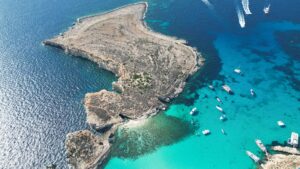
Best for: Advanced and experienced snorkellers only | Depth: 2-15m | Marine life: Octopus, grouper, moray eels, parrot fish, cuttlefish (spring), wrasse — highest marine biodiversity on the Comino coastline
The richest reef in terms of sheer biodiversity anywhere around Comino — genuinely exceptional in the variety and density of species. This is the professional snorkeller’s choice.
Two honest warnings:
The currents at Cominotto Reef can be strong — significantly stronger than at the lagoon spots. Experienced swimmers only, and always under your skipper’s assessment of conditions on the day.
The boat traffic is high — Cominotto sits directly in the Blue Lagoon approach route, and ferry traffic passes through constantly in peak season. A surface marker buoy is not optional here. It is essential.
For the complete Cominotto guide, read here.
⚓ 7. P31 Wreck — Comino
Best for: Free divers and experienced snorkellers | Depth: Starts at 12m, wreck at 18m | Marine life: Sea bream in large numbers, damselfish, wrasse throughout the structure
The Patrol Boat P31 lies upright on the sandy seabed south of the Blue Lagoon — almost perfectly intact, starting at 12 metres with the lower section at 18 metres.
This is primarily a free diver’s spot — you need to get down to properly experience the wreck. Confident free divers descend along the hull, into the superstructure, and back up — with sea bream and damselfish moving through the wreck in large numbers throughout.
For underwater photography: The P31 is one of the finest underwater photography locations in the Maltese archipelago. The combination of clear water, the intact wreck structure, and the dense fish life creates images that look extraordinary. If underwater photography is part of your trip, mention it when booking — your skipper can time the stop for the best light conditions.
Licensed scuba divers can explore it in full with OrangeShark Diving Centre.
🐘 8. Kissing Elephants Cove — Comino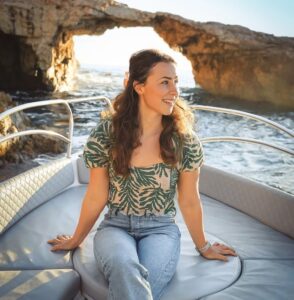
Best for: All levels including beginners | Depth: 2-15m+ | Marine life: Parrot fish, rabbit fish, groupers, wrasse, sargos — healthy and varied reef
One of the most genuinely beginner-friendly boat-access snorkelling spots on the entire Comino coastline — vivid blue water, a sheltered cove framed by two limestone formations, and a healthy, varied reef that rewards even casual snorkellers.
What you’ll see: Parrot fish and rabbit fish are particularly common here — more so than at most other Comino spots. Add groupers resting near the formations, wrasse in various species moving through the reef, and sargos in the shallower sections, and this is one of the most species-rich accessible spots on the circuit.
The deeper water around the base of the formations suits free divers — the reef drops away and the rock formations create interesting structure at depth. But the shallower sections are calm, clear, and genuinely accessible for anyone comfortable in the water.
🔴 9. Lantern Point — Comino
Best for: Advanced snorkellers and free divers | Depth: 6m plateau / 50m+ drop-off | Marine life: Groupers, moray eels, pelagic fish, painted combers, rainbow wrasse, ornate wrasse, peacock wrasse, sargos, salema, bogue, sea bream, damselfish — the richest reef in this guide
The richest reef snorkelling on the Comino coastline — and one that demands respect. The 6-metre plateau is alive with the full range of Mediterranean reef species. Beyond the edge, the seabed drops away to 50+ metres.
The Chimney: An L-shaped vertical tunnel from 6m opening into a cave at 16m — advanced divers only.
The honest warning: Currents at Lantern Point can be strong. This is not a casual first swim. It’s the spot we bring guests who specifically want the most extraordinary marine environment on the whole tour. Let your skipper know if this is a priority — conditions need to be right.
For the complete Lantern Point guide, read here.
🐙 10. Ħalfa Rock & Żrieżaq Bay — South Gozo

zriezaq bay and halfa rock , exploring by a private boat charter malta with outdoor explorers
Best for: All levels | Depth: 3-10m | Marine life: Octopus, moray eels, rabbit fish, wrasse, painted comber
One of the finest octopus-spotting spots in the Maltese archipelago — rocky reef in relatively shallow water, with octopus activity that makes the painted combers here particularly conspicuous, since they follow octopus closely. Ħalfa Rock also has natural clay deposits — the mud treatment is optional, but most guests who do it say it was the most unexpected highlight of the day.
For the complete Ħalfa Rock guide, read here.
🌀 11. Tac-Ċawl Cove — Gozo
Best for: Beginners and all levels | Depth: 1-8m (large shallow section) | Marine life: Sargos, parrot fish, wrasse, damselfish, reef species
A hidden cave and cove near Ħondoq ir-Rummien with a genuinely large shallow water section that makes it accessible even for beginners. The shallow section is clear, calm, and home to a good range of reef species — sargos, parrot fish, wrasse, and damselfish are all common here. Swim further in toward the cave interior for the more dramatic sections and slightly deeper water.
Not on any tourist map. Ask your skipper specifically for Tac-Ċawl.
🎭 12. Count of Monte Cristo Cave — Comino
Best for: Experienced free divers — do not attempt alone | Depth: Variable through multiple chambers | Marine life: Cave species throughout the tunnel network — air pockets throughout
A paradise for experienced free divers — and one of the most genuinely adventurous snorkelling experiences in the entire Maltese archipelago.
The cave system is a network of connected underwater tunnels. The experience for a confident free diver is extraordinary: dive from one cave, navigate the tunnel, surface in the next chamber. Then dive again and surface in the one after that. Multiple air pockets throughout the system mean this is a series of connected dives, not a single enormous breath-hold.
Three things to know before entering:
Fins are essential — the tunnels are long. You need fins and the ability to make proper, sustained free dives to experience this properly.
Do not go alone — the tunnel system is complex, the dives are long, and having a dive buddy in the water is non-negotiable.
Air pockets throughout — the cave system has multiple natural air pockets at various points, meaning experienced free divers can surface, rest, and continue. This makes the full circuit achievable for fit, experienced free divers.
For the complete guide, read here.
🌺 13. Santa Marija Bay — Comino (Bonus Shore-Access Spot)

santa marija comino in the winter
Best for: Beginners, families with children | Depth: 0.5-4m (very shallow) | Marine life: Seahorses in the shallows, sea bream, damselfish, reef species
Comino’s only real sandy beach — accessible from the island on foot or by private boat — and one of the most family-friendly snorkelling stops on the island.
The seahorse secret: The shallow water on the east side of the beach is one of the best seahorse-spotting locations in the Maltese archipelago. Move slowly, look carefully into the seagrass, and they are there — almost invisible until you know what to look for, then suddenly obvious. Most people swim straight past them. This is exactly the kind of local knowledge that makes a skipper who has been here every day different from a guidebook.
The shallow water on the east side is also the safest section for young children — calm, sandy-bottomed, and completely protected from boat traffic.
For the complete Santa Marija Bay guide, read here.
Best Snorkelling Spots — Accessible by Land
🌊 14. Għajn Tuffieħa Bay — Malta
Best for: All levels | Depth: 2-8m | Marine life: Sea bass, octopus, crabs, stingrays on sandy bottom
One of Malta’s finest beaches for swimming, and genuinely good for snorkelling along the rocky sections on either side of the bay. Swim along the rocks rather than straight out — that’s where the marine life concentrates. On the sandy bottom in the shallower centre, keep an eye out for stingrays resting on the seabed.
Local Tip
Afternoon is better here for fish activity — from about 15:00 onward, as boat traffic reduces and the water cools slightly, fish become noticeably more active around the reef.
🐟 15. Għar Lapsi — Malta
Best for: Beginners | Depth: 1-6m | Marine life: Sea bream, octopus, sea urchins, reef fish
A sheltered natural rock pool on Malta’s southwest coast — shallow, calm, and genuinely one of the best beginner snorkelling spots on the main island. The water inside the pool is exceptionally clear, and you can swim further out for deeper water and more varied marine life.
Primarily a local spot rather than a tourist one — which generally means better conditions and a more relaxed atmosphere.
🔵 16. St Peter’s Pool — Malta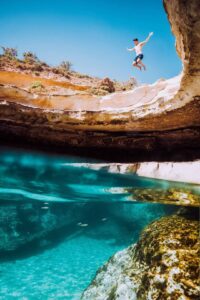
Best for: Experienced snorkellers | Depth: 4-15m | Marine life: Wrasse, parrot fish, scorpionfish, occasional seahorses
A natural rock pool near Marsaxlokk with deep blue water and genuinely excellent visibility. The rocky walls support wrasse, parrot fish, and scorpionfish — cryptically coloured against the rock and easy to miss unless you know what to look for.
Better suited to confident swimmers — the water is deep and exposed compared to other land-access spots.
For the complete St Peter’s Pool guide, read here.
🌊 17. Blue Grotto — Malta
Best for: Intermediate | Depth: 5-20m | Marine life: Moray eels, groupers, damselfish in hundreds at cave entrances
Best experienced by snorkelling early morning on a calm day when the sun sends light directly into the cave mouths and the damselfish are in enormous numbers around the entrances.
Honest advice: Currents can be present and boat traffic is continuous in peak season. Early morning, outside ferry hours, is the only sensible time to snorkel here.
For the complete Blue Grotto guide, read here.
🤿 18. Imġiebaħ Bay — Malta
Best for: All levels | Depth: 1-6m | Marine life: Octopus, reef fish, crabs, seagrass species
A secluded bay on Malta’s north coast — away from tourist crowds, with a short hike required. Calm, protected water with rocky outcrops, seagrass beds, and one of the best spots on the main island for octopus in the morning hours.
🏖️ 19. Ħondoq ir-Rummien — Gozo
Best for: All levels | Depth: 1-8m | Marine life: Cuttlefish (spring), octopus, sea bream, seagrass species
A sheltered bay on Gozo’s southeast coast with clear, shallow water and seagrass beds — excellent habitat for cuttlefish in spring and octopus throughout summer. Best visited early morning or late afternoon to avoid peak boat traffic.
Local Secret — Bemberin Gorge, Just Around the Corner
Very close to Ħondoq ir-Rummien — accessible by boat from the bay — is Bemberin Gorge: crystal waters and two caves with natural air pockets inside. The marine life mirrors Ħondoq exactly — same species, same reef quality — but with the added extraordinary feature of the air pocket caves for confident swimmers to explore. Almost nobody knows it exists. Ask your skipper before arriving at Ħondoq if you want to include Bemberin in the stop.
🕳️ 20. Dwejra Blue Hole — Gozo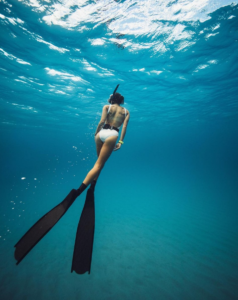
Best for: Experienced snorkellers | Depth: 6-16m inside / 40m+ outside | Marine life: Ornate wrasse, rainbow wrasse, peacock wrasse, damselfish, groupers
The most dramatic snorkelling environment in Gozo — a natural limestone sinkhole at Dwejra with a cave opening to the open sea. The wrasse populations here are among the most diverse anywhere in the Maltese islands.
The honest warning: The entry over sharp rocks can be genuinely dangerous if there is any swell. Check conditions carefully. Do not attempt in rough seas — the Inland Sea nearby is the calmer alternative on difficult days.
🕍 21. Wied il-Għasri — Gozo
Best for: Intermediate | Depth: 1-12m | Marine life: Crabs, starfish, reef fish, cave species along gorge walls
A narrow fjord-like inlet on Gozo’s north coast — dramatic and one of the most scenic snorkelling environments in the Maltese islands. The steep gorge walls create deep shade and habitat for species that don’t appear in open-water spots.
Cathedral Cave — Advanced Free Divers Only
Just off the main inlet, there is a Cathedral Cave accessible only to professional and very experienced free divers. This is a serious technical free dive requiring proper training, experience, and a dive partner. If you are at that level, ask your skipper about it specifically.
🌊 22. Xlendi Bay — Gozo
Best for: All levels | Depth: 2-12m | Marine life: Zoanthids, red starfish on cave walls, sea arches, cave species
A scenic inlet on Gozo’s southwest coast with underwater sea arches and cave walls supporting zoanthids (colonial anemones) and red starfish — species not commonly seen at more open snorkelling spots. A genuinely distinctive underwater environment.
🌊 23. Xwejni Bay — Gozo

snorkling in gozo malta
Best for: Beginners and intermediate | Depth: 1-6m | Marine life: Small reef fish, crabs, underwater tunnels in rock formations
A very shallow bay on Gozo’s north coast. Swim right toward the prominent rock visible from the shore — underwater tunnels in the rock formations create a playful, genuinely interesting snorkelling environment even in very shallow water.
🏖️ 24. Ramla Bay — Gozo
Best for: Beginners | Depth: 1-6m along rocks | Marine life: Sea bass, moray eels, crabs along rocky sections
Gozo’s largest sandy beach — swim along the rocky sections on either side rather than in the open sandy centre. Safe, shallow, and appropriate for first-timers.
For the complete Gozo beaches guide, read here.
Boat vs Land — The Honest Comparison
| By Land | By Private Boat | |
|---|---|---|
| Spots available | ~11 | 24+ |
| Cave snorkelling | Limited | ✅ Full cave circuit |
| Wreck snorkelling | ❌ | ✅ P31 wreck |
| Air pocket caves | ❌ | ✅ San Niklaw, Bemberin, Count of Monte Cristo |
| Secret spots | ❌ | ✅ D&G Cave, Tac-Ċawl, Kissing Elephants, Bemberin |
| Marine diversity | Good | ✅ Significantly richer |
| Seahorse spotting | ⚠️ Shore only | ✅ East side Santa Marija Bay |
| White bread fish feeding | ✅ at some spots | ✅ At every lagoon stop |
| Crowds | Variable | ✅ Controlled |
| Cost | Free (equipment only) | From €99/boat split among group |
The honest verdict: For casual snorkelling on a beach holiday, land-access spots are perfectly good — Dwejra Blue Hole, Għar Lapsi, and Ħondoq ir-Rummien are all outstanding without needing a boat. For the genuine best of what the Maltese coastline has to offer — the caves, the wreck, the secret coves, the richest reefs — a private boat is the only way.
For the private boat vs group tour comparison, read here.
Best Time of Year to Snorkel in Malta
| Month | Water Temp | Visibility | Crowds | Notes |
|---|---|---|---|---|
| March-April | 16-18°C | ⭐⭐⭐⭐⭐ Exceptional | Very low | Cuttlefish aggregating — wetsuit recommended |
| May | 19-21°C | ⭐⭐⭐⭐⭐ Exceptional | Low | Best month for cuttlefish and visibility |
| June | 22-24°C | ⭐⭐⭐⭐⭐ Excellent | Low-medium | Sea bream peak begins, warm enough for all-day sessions |
| July | 25-27°C | ⭐⭐⭐⭐ Very good | High | Warmest, busiest at popular spots |
| August | 28-30°C | ⭐⭐⭐⭐ Very good | Very high | Hottest water, octopus peak — go early or late |
| September | 27-28°C | ⭐⭐⭐⭐⭐ Excellent | Medium | Best all-round month |
| October | 24-26°C | ⭐⭐⭐⭐⭐ Exceptional | Low | Outstanding — warm water, best visibility of year |
| November | 20-22°C | ⭐⭐⭐⭐⭐ Exceptional | Very low | Cold for long sessions without wetsuit |
What to Bring for Snorkelling in Malta
Essential:

Snorkel underwater in Comino’s blue waters on a private trip.
- Mask and snorkel — provided on all Outdoor Explorers Malta tours. If independent, rent from a dive shop (€5-10/day) not tourist shops
- Fins — make a significant difference to how far and how efficiently you move
- Water shoes — essential for rocky entry points at most Maltese snorkelling spots
- Reef-safe sunscreen SPF 50+ — the sun reflecting off water and limestone is exceptionally intense
- White bread in a zip-lock bag — the most underrated item on this list. Sea bream and damselfish at the Blue Lagoon and Crystal Lagoon respond immediately. One of the most memorable moments of any Comino day
Safety:
- Surface marker buoy (SMB) — absolutely essential if snorkelling anywhere with boat traffic. Signals your position to passing vessels
- Plenty of water — dehydration on a boat day happens faster than most people expect
Optional:
- Underwater camera or waterproof phone pouch — the marine life here photographs extraordinarily well
- Lightweight wetsuit or rash vest — useful for early morning sessions in May, June, or October, and for sun protection in peak summer
For the complete what-to-bring guide, read here.
Safety — What the Other Guides Don’t Tell You
Boat traffic is the most serious snorkelling hazard in Malta — particularly in busy areas like the Blue Lagoon and Cominotto Reef. If you are snorkelling anywhere that isn’t a designated swimming area, carry a surface marker buoy. This is not optional in areas with boat traffic.
Rocky entries are more dangerous on the way out than on the way in. Getting into the water is usually manageable. Getting out when there is swell — particularly at the Blue Hole in Dwejra and Blue Grotto — can be genuinely difficult. Always watch a few waves before committing to an exit.
Sea urchins are present at most rocky entry points. Water shoes are important. They don’t move — but bare feet on rocky Maltese coastline finds them regularly.
Currents at Lantern Point, Cominotto Reef, and Dwejra Blue Hole can be strong. All three are recommended for experienced swimmers only. At Lantern Point and Cominotto specifically, your skipper assesses conditions on the day before entering.
Cave snorkelling safety: For the Count of Monte Cristo Cave, San Niklaw Gorge tunnel, and the Cathedral Cave at Wied il-Għasri — do not attempt alone, fins are essential, and only experienced free divers should enter. These are not casual swim-through caves.
Jellyfish appear occasionally — mainly in May with west wind conditions. On a private boat, the skipper moves immediately to clean water. Full jellyfish guide here.
Sun. Mediterranean UV on flat water is deceptive — long sessions without a rash vest or regular sunscreen reapplication result in severe sunburn faster than most people expect.
Book a Private Snorkelling Tour
The spots in the boat-access section of this guide — the caves, the wreck, the hidden coves, the richest reefs — are only accessible on a private or self-drive boat. Most of the truly extraordinary ones require a skipper who actually knows where they are.
Private Boat Tours With Skipper
| Tour | Duration | Price | Best Snorkelling Stops | Book |
|---|---|---|---|---|
| 1 Hour Express | 1h | €99/boat | Blue Lagoon + Crystal Lagoon | Book |
| 2 Hours | 2h | €199/boat | Blue Lagoon + Crystal Lagoon + cave entrances | Book |
| 3 Hours ⭐ | 3h | €289/boat | Full Comino circuit including caves + secret spots | Book |
| 4 Hours | 4h | €369/boat | Comino circuit + south Gozo + Ħalfa Rock | Book |
| 6 Hours | 6h | €539/boat | Full Comino + full south Gozo coast | Book |
| 8 Hours Full Gozo ⭐ | 8h | €699/boat | Everything — full Gozo + Comino circuit | Book |
| Sunset | 3h | €289/boat | Blue Lagoon + Crystal Lagoon in golden light | Book |
💰 Early bird: €20 off 3h, 6h and 8h tours booked 14+ days in advance
Self-Drive Boat Rental
👉 All Tours | Book Now | Contact Us
FAQ — Snorkelling in Malta 2026
Where is the best snorkelling in Malta?
For boat-access snorkelling: the Crystal Lagoon, Cominotto Reef, Lantern Point, and the Count of Monte Cristo Cave at Comino are the finest spots in the archipelago. For shore-access: Dwejra Blue Hole in Gozo and Għar Lapsi in Malta are the top two.
What is the best time of year to snorkel in Malta

snorkel with a buddy
May, September, and October offer the best balance of warm water and exceptional visibility. June, July, and August are warmest — go early morning or late afternoon to avoid peak boat traffic and crowds. Late afternoon from 16:00 onward is particularly good for fish activity.
Do you need a wetsuit to snorkel in Malta?
No — in July and August, water temperatures regularly reach 29-30°C. In May or October, a thin shorty is useful for long sessions. Outside those months most people don’t need one.
Is snorkelling at the Blue Lagoon worth it?
Yes — even with the shore crowds. From a private boat anchored in open water, the snorkelling in the deeper, more vivid sections away from the shore is genuinely extraordinary. Bring white bread — the sea bream response is one of the highlights of the day.
Can beginners snorkel in Malta?
Absolutely. Għar Lapsi, Imġiebaħ Bay, Ħondoq ir-Rummien, the Blue Lagoon from a private boat, Kissing Elephants Cove, and the east side of Santa Marija Bay are all excellent beginner spots — shallow, calm, and safe.
What fish can you see snorkelling in Malta?
Sea bream, damselfish, sargos, salema, bogue, rainbow wrasse, ornate wrasse, peacock wrasse, painted comber, parrot fish, rabbit fish, moray eels, octopus, grouper, barracuda, and cuttlefish in spring. Seahorses in the shallow seagrass on the east side of Santa Marija Bay.
What is the best local tip for snorkelling in Malta?
Bring white bread. Sea bream and damselfish at the Blue Lagoon and Crystal Lagoon respond immediately — dozens arrive within seconds. Also, snorkel in late afternoon from 16:00 onward for noticeably more fish activity as boat traffic reduces.
Is the Dwejra Blue Hole safe?
Safe in calm conditions — genuinely dangerous in rough seas. Entry and exit is over sharp rocks. Check conditions carefully and do not enter if there is significant swell.
Can you see seahorses snorkelling in Malta?
Yes — the shallow seagrass on the east side of Santa Marija Bay at Comino is one of the best seahorse-spotting locations in the archipelago. Move slowly and look carefully into the seagrass.
Can you see dolphins while snorkelling in Malta?
Dolphins are almost exclusively seen from boats rather than while snorkelling — they move through the open channel between Malta and Comino, typically on early morning crossings. Roughly 20% chance on any given morning tour.
Do I need a guide to snorkel in Malta?
For land-access spots, no. For the boat-access spots — the caves, the wreck, the secret coves — you need a skipper who knows where they are. These spots don’t exist on any standard map.
Is there snorkelling gear rental in Malta?

free dive crystal waters
Yes — dive shops throughout Malta and Gozo offer mask, snorkel, and fin rental for approximately €5-15 per day. All snorkelling equipment is provided on all Outdoor Explorers Malta private tours.
What is the best snorkelling spot for free divers in Malta?
The Count of Monte Cristo Cave on Comino — a network of connected underwater tunnels with multiple air pockets, where experienced free divers can move from chamber to chamber. San Niklaw Gorge and the P31 Wreck are close behind. Do not attempt the cave system alone.
Further Reading
- Blue Lagoon Malta — Complete Guide 2026
- Crystal Lagoon Malta — Complete Guide
- Comino Island Malta — Complete Guide 2026
- Comino Sea Caves — Complete Guide
- Lantern Point Comino — Dive Site Guide
- Count of Monte Cristo Cave Comino
- Cominotto Island — Malta’s Best Kept Secret
- Best Things To Do on Comino 2026
- Ħalfa Rock & Żrieżaq Bay Gozo
- Santa Marija Bay — Complete Guide
- Jellyfish Malta — Blue Lagoon & Comino
- What to Bring on a Boat Trip Malta
- Cliff Diving Malta
- Private Boat Tour Malta — Complete Guide
- Private Boat vs Group Tour
- Best of Gozo Island
- Gozo Beaches Guide 2024
- Blue Grotto Malta
- St Peter’s Pool Malta
- 5 Days in Malta Itinerary
- How to Get to the Blue Lagoon Malta