
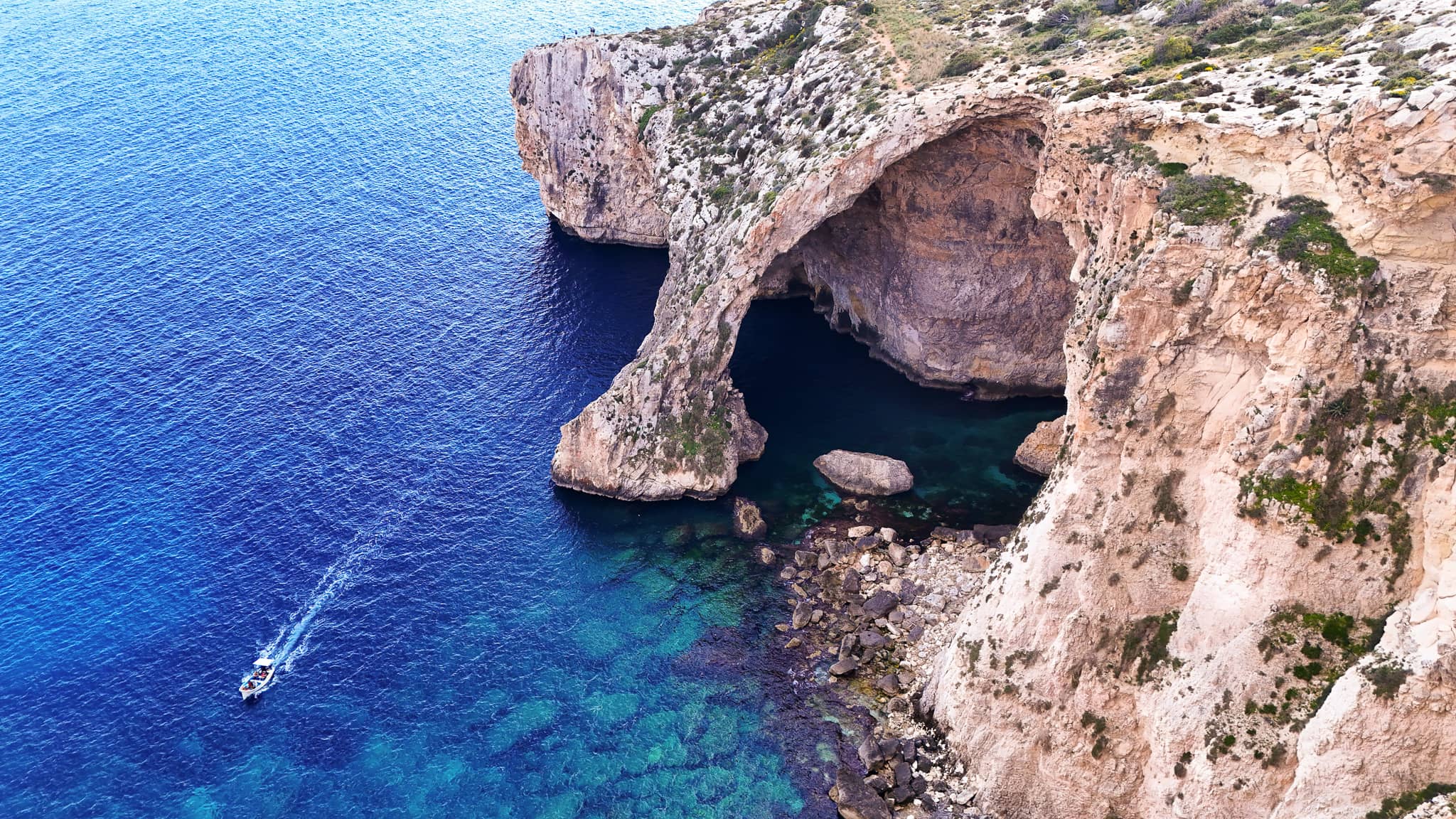
Blue Grotto Malta — The Complete Guide 2026
The first time you see it, it genuinely does not look real.
The water shifts from sapphire to cobalt to a phosphorescent, almost electric blue that seems to come from inside the rock itself. Sunlight enters through an underwater opening in the cave floor, hits the white limestone seabed, and bounces back upward — illuminating the cave ceiling and walls with a glow that changes colour as the boat glides deeper inside. The mineral-rich cave walls flash orange, purple, green, and yellow as the light moves across them. For a few moments, the entire cave is silent except for the sound of the water and the occasional camera click.
This is the Blue Grotto — Malta’s most famous sea cave system — and it is one of the genuinely extraordinary natural wonders of the Mediterranean.
This guide covers everything. The history, the science behind the blue, all seven caves explained, the boat tour in detail, the best time to visit, how to get there from anywhere in Malta, diving, swimming, snorkelling, photography tips, nearby attractions, where to eat, and — crucially — the private boat tour option that gives you the Blue Grotto from a completely different angle.
Written by a team that is on Malta’s water every single day.
Blue Grotto Malta — Quick Facts 2026
| Official Name | Blue Grotto — Maltese: Taħt il-Ħnejja (Under the Arch) |
| Location | Wied iż-Żurrieq, southwest Malta, Qrendi village confines |
| Number of caves | 7 — including main grotto and six named caves |
| Main arch height | Approximately 30 metres |
| Boat tour price | €10 adults / €5 children |
| Boat tour duration | 20–25 minutes |
| Best time | Morning — 08:00 to 13:00 for most vivid blue |
| Tours operate | Daily, weather permitting |
| Getting there | Bus route 74 from Valletta, car, taxi, or private boat |
| Parking | Available at Wied iż-Żurrieq — fills fast in summer |
| Viewpoint | Free — clifftop viewpoint on main road before descent |
| Swimming | Yes — in Wied iż-Żurrieq harbour and near the arch |
| Diving | Outstanding — Um El Faroud wreck, East and West Reefs |
| Nearby temples | Ħaġar Qim and Mnajdra — 5 minutes, UNESCO World Heritage |
| Nearby island | Filfla — uninhabited bird sanctuary, visible from viewpoint |
| Film connections | Troy, Hell Boats, Cadbury Milk Tray adverts, The Amazing Race |
| New private boat service | Launching May 2026 from south Malta |
What Is the Blue Grotto Malta?

Blue Grotto View Point
The Blue Grotto Malta is a system of seven sea caves on the southwest coast of Malta, located near the tiny fishing harbour of Wied iż-Żurrieq and accessible only by boat. The caves are carved into the limestone cliffs at sea level — shaped over millions of years by the relentless action of waves against Malta’s southern coast — and are famous for the extraordinary blue light that illuminates the cave interiors.
The exact location is approximately 1 kilometre west of Wied iż-Żurrieq harbour itself, along the cliff base. The harbour is where the boat tours depart from. The caves are where the magic is. Administratively, both the harbour and the caves fall within the confines of Qrendi village — a fact established by a legal dispute in 1910 between the neighbouring villages of Qrendi and Żurrieq.
The area sits directly opposite Filfla — a small uninhabited rocky island visible from the clifftop viewpoint, designated as a protected bird sanctuary. Filfla appears in almost every photograph taken from the Blue Grotto viewpoint, adding a dramatic backdrop to the sea arch.
The Science Behind the Blue — Why Is the Water That Colour?
The blue colour is not a trick of photography. It is not enhanced in photographs. It genuinely looks like that — and the science behind it is fascinating.
The caves have two separate underwater openings in the cave floor. Sunlight enters through these openings, passes through the water column, hits the brilliant white limestone seabed below, and bounces back upward. This reflected light travels back up through the water and illuminates the cave from below — creating the famous phosphorescent blue glow that appears to come from inside the water itself rather than from above.
The intensity and colour of the blue depends on three factors:
1. Time of day — the sun must be at the right angle to send light through the underwater openings. This occurs in the morning hours. As the sun rises higher toward midday, the angle shifts and the effect gradually diminishes. By early afternoon, the direct illumination fades and the water becomes a beautiful deep blue rather than the vivid electric glow of the morning.
2. Sea conditions — rough water stirs up sediment and reduces water clarity. The clearest, most vivid blue occurs on calm days with flat seas.
3. Season — the sun’s path varies throughout the year. The most dramatic blue occurs in spring and early summer when the sun angle in the morning is optimal for sending light through the cave floor openings.
Additionally, the cave walls themselves contribute to the colour show. The limestone is rich in minerals — iron, magnesium, calcium — that produce flashes of orange, purple, green, and yellow when illuminated. The result, on a perfect morning, is something genuinely closer to a natural light installation than a simple sea cave.
The History of the Blue Grotto Malta
How the Blue Grotto Got Its Name
The Blue Grotto has not always been called the Blue Grotto.
The Maltese name — Taħt il-Ħnejja — means “Under the Arch.” It is a straightforward, practical Maltese name for a place that is, quite literally, a large arch in the cliff face with several adjoining caves.
The English name — Blue Grotto — is attributed to a British soldier stationed in Malta during the 1950s. The vivid blue of the cave water reminded him of the famous Grotta Azzurra in Capri, Italy. The name stuck, spread through the British colonial community, and has remained ever since. Today the Maltese name and the English name coexist — the caves are referred to by both.
Ancient Use — Fishermen’s Shelter
For centuries before the name and before the tourists, the Blue Grotto served a purely practical purpose: shelter for fishermen. The natural arch and the protected cave entrances provided refuge from sudden storms on the exposed southwest coast of Malta. Even today, as dawn breaks, local fishermen from Wied iż-Żurrieq set out in their traditional boats — a continuity of maritime activity that stretches back without interruption for generations.
Film History — Troy, Hell Boats and Cadbury
The Blue Grotto and the surrounding southwest Malta coastline have been used as film and advertising locations for decades. The location has been used in productions including Hell Boats, Troy, the 25th season of The Amazing Race, and Cadbury Milk Tray chocolate adverts, among other smaller commissions and photoshoots. Wikipedia
The Troy connection is particularly notable — the same production that filmed at Cominotto’s cave in the Blue Lagoon also used the Blue Grotto coastline. Malta’s extraordinary concentration of dramatic limestone coastal scenery within a small area has made it one of the most productive film locations in the Mediterranean for more than half a century.
The Seven Caves — A Complete Guide
Most visitors know about the Blue Grotto itself. Very few know all seven caves — or what makes each one distinct.
1. The Main Blue Grotto — Taħt il-Ħnejja
The centrepiece. The cave the whole tour is built around.
The main arch reaches approximately 30 metres in height — tall enough to make the small traditional boats beneath it look genuinely miniature. This is the cave where the boatman cuts the engine and lets the boat glide silently into the chamber. The glow of the water from below, the colours on the walls, and the extraordinary scale of the arch above create a moment that silences even the most chatty boat passengers.
This is the cave with the two underwater floor openings that produce the famous blue light effect. Morning visits — before 13:00 — produce the most vivid illumination. The effect fades through the afternoon but never disappears entirely.
2. Honeymoon Cave
The most romantically named of the seven. Honeymoon Cave earned its name because it became a popular stop for newly-married couples visiting Malta on honeymoon — a tradition that appears to date from the early tourist era of the mid-20th century. The cave has a more intimate scale than the main grotto and the blue reflection effect inside is more contained — which makes it feel more private and more personal than the main arch.
The name has become self-fulfilling. People specifically ask the boatman to pause at Honeymoon Cave for photographs. The tradition continues.
3. Cat’s Cave
One of the most distinctive of the smaller caves — Cat’s Cave is named for the shape of the entrance, which from certain angles resembles the profile of a cat’s face. The cave interior produces its own variation of the blue reflection effect, slightly different in tone from the main grotto because of the different geometry of its underwater openings and the mineral composition of its walls.
4. Reflection Cave
Arguably the most purely beautiful of the smaller caves. The cave walls at Reflection Cave are positioned at an angle that creates multiple layers of reflected colour simultaneously — the blue from the water below reflecting off walls that themselves carry the orange and yellow of iron-rich limestone. The result on a good morning is something close to abstract art, produced entirely by water, light, and rock.
5. The Elephant Foot
Less well known than the three named caves above, the Elephant Foot takes its name from the rock formation at the cave entrance — a broad, rounded limestone column that resembles, with some imagination, the foot of an elephant. The cave itself is smaller than the others and is not always included in every boat tour, depending on conditions and the discretion of the boatman.
6 and 7. The Additional Caverns
Several caverns also mirror the brilliant phosphorescent colours of the underwater flora and fauna, whilst other caverns show a deep dark shade of blue. Gozoblu The final two caverns in the system are less consistently visited and less consistently named — their inclusion in any given boat tour depends on sea conditions and the knowledge and enthusiasm of the individual boatman. On a calm day with a knowledgeable boatman, all seven are accessible. On busier or rougher days, the tour concentrates on the main four.
💡 Local Tip: Ask your boatman specifically about all seven caves before departure. The best boatmen — those from families who have worked these waters for generations — know every cave and will show you more on a quiet morning than the standard tour covers. Go early and ask questions. They enjoy sharing knowledge about the place they have worked their entire lives.
The Blue Grotto Boat Tour — Everything You Need to Know
How It Works
The boat tour is the only way to experience the caves from the inside. Head down the steep hill into Wied iż-Żurrieq to the small harbour at the bottom. The ticket booth is immediately visible — you cannot miss it. Purchase your ticket (€10 adult, €5 child) and wait to be directed to one of the traditional Maltese boats.
These are small, open-air boats seating approximately 8 to 10 people. They are traditional in design — similar to the colourful luzzu fishing boats that define Maltese harbour culture — operated by boatmen who are, in many cases, from families that have been navigating these specific waters for generations.
The tour lasts approximately 20 to 25 minutes. You leave the harbour, turn left along the cliff base, and the boatman guides the boat through the cave system — pointing out rock formations, explaining the light effects, and manoeuvring the boat into each cave at the optimal angle for the illumination.
Sit on the Right Side
For the best views and the best photographs — sit on the right-hand side of the boat on the way out from the harbour. As the boat turns left toward the caves, the right side faces the cliff face and gives you the first view of the cave entrances as you approach. The left side is looking out to open sea.
What the Boatman Will Show You
The best boatmen add significantly to the standard tour. Beyond the cave entrances, they will typically point out:
- The rock formations along the cliff base — shapes that resemble animals, faces, and other recognisable forms that centuries of sailors and fishermen have given names to
- The colour variations on the cave walls — explaining why certain sections are orange, why others are green, and what mineral content produces each colour
- Filfla island in the distance — the uninhabited bird sanctuary that appears in the background of most Blue Grotto photographs
- The underwater cave floor visible through the extraordinarily clear water as the boat moves between caves
- The Um El Faroud wreck marker buoy visible to the northwest — pointing out where the famous tanker lies on the seabed
Cash Only
The boat tour operators are cash only. There is an ATM in Wied iż-Żurrieq but always have cash with you before you arrive. Card payments are not accepted.
The Best Time to Visit the Blue Grotto Malta
By Time of Day
| Time | Light Quality | Crowd Level | Verdict |
|---|---|---|---|
| Before 09:00 | Outstanding | Low | Best possible experience |
| 09:00–11:00 | Excellent | Low–moderate | Still excellent |
| 11:00–13:00 | Very good | Moderate–high | Good visit, slight fade |
| 13:00–15:00 | Good | High | Beautiful but glow reduced |
| After 15:00 | Fair | Low | Deep blue, magical glow gone |
| Boat tours end | ~16:00–17:00 | — | Last tours of the day |
The single most important piece of advice for visiting the Blue Grotto is go in the morning. Before 09:00 is ideal. Before 10:00 is still excellent. The difference between the Blue Grotto at 09:00 and at 14:00 is not minor — it is the difference between the cave lit from below in vivid electric blue and the cave lit from above in ordinary daylight. Same cave. Completely different experience.
💡 Local Tip: Head to the Blue Grotto viewpoint on the cliff road first — before descending to Wied iż-Żurrieq. The viewpoint gives you the postcard photograph of the main arch against the sea. Do this in the first light of morning when the air is clear and the cliff catches the early sun. Then descend to the harbour for the boat tour.
By Season
Spring (April–June) — The best overall season. Weather is warm and reliable, the sea is calm, the summer crowds have not yet fully arrived, and the sun angle in the morning is optimal for the blue light effect. Furthermore, the surrounding Maltese countryside is at its most green and vivid after the winter rains.
Summer (July–September) — Peak season. Hot, busy, and the parking fills fast. Go early — before 09:00 — to beat the crowds and get the best light. The boat tours only operate in calm seas, and the Mediterranean is generally at its calmest in July and August. However, occasional storms and strong south winds can cause cancellations.
Autumn (October–November) — Similar to spring. Pleasant temperatures, fewer crowds, and the sea usually calm. October in particular is an excellent month — the summer tourist volume drops significantly but the weather remains warm and the sea swimmable.
Winter (December–March) — Boat tours are weather-dependent and there can be long periods where the sea is too rough. However, if you visit on a calm, clear winter morning, you can experience the Blue Grotto in near-complete solitude. The blue light effect, on a calm February morning with no other boats in the cave, is one of the most extraordinary things available in Malta.
How to Get to the Blue Grotto Malta
By Car — Most Flexible
From Valletta, the drive takes approximately 40 to 45 minutes via the main road south. Follow signs for Żurrieq village and then for the Blue Grotto — it is well-signposted once you reach the Qrendi area.
Parking is available at Wied iż-Żurrieq but fills quickly in summer — by 10:00 on peak weekends. Unofficial overflow parking exists in nearby fields; a small fee (€2–€3) is collected by locals directing traffic. Have cash ready.
By Bus from Valletta
Bus route 74 is the direct connection from Valletta to Wied iż-Żurrieq. The journey takes approximately 40 to 50 minutes and drops you at the village — from where you walk down the steep hill to the harbour.
From Sliema or St Julian’s: Take any bus to Valletta bus terminus first, then transfer to route 74.
From Buġibba, Qawra, or St Paul’s Bay: Travel to Valletta first and transfer to route 74.
From the Airport: Bus route X1, 41, 42, 49, or 250 to Valletta, then route 74.
From Marsaxlokk: To Valletta first, then route 74. Total journey approximately 1 hour 15 minutes.
💡 Local Tip: The bus stop for the Blue Grotto is called “Panorama” — it is on the main road above Wied iż-Żurrieq, requiring a 15-minute walk downhill to the harbour. On the return, that 15-minute walk becomes uphill in the Maltese sun. Factor this in when planning your energy.
By Private Boat — The New Option for 2026
From May 2026, Malta Blue Grotto will be operating private boat tours along the south Malta coastline from Marsaxlokk — covering St Peter’s Pool, the natural lagoons, and the Blue Grotto itself in a single day.
This is a significant development for anyone who wants to experience the Blue Grotto properly. While the traditional tour boats take you through the caves from inside Wied iż-Żurrieq, a private boat approaching the Blue Grotto from the open sea gives you a completely different perspective — the full scale of the 30-metre arch visible against the cliff face, the cave entrances lit from the water, and the entire southwest Malta coastline visible in both directions.
Furthermore, the private boat gives you access to the waters around the Blue Grotto for swimming — anchored in open water near the cave entrances in conditions that the standard tour boats never reach.
By Taxi or Bolt
Taxis and the Bolt app are reliable alternatives to the bus from anywhere in Malta. The drive from Valletta takes approximately 40 minutes. From Sliema or St Julian’s, approximately 45 to 50 minutes. From Marsaxlokk, approximately 20 to 25 minutes — making the combination of a Marsaxlokk fish lunch and a Blue Grotto afternoon an easy half-day itinerary.
The Blue Grotto Viewpoint — Free and Magnificent
Before descending to Wied iż-Żurrieq, stop at the clifftop viewpoint on the main road above. This is where the iconic postcard shot of the Blue Grotto comes from — the full 30-metre arch visible against the open sea, with Filfla island in the background.
The viewpoint is completely free. There is a small car park. The best photography time is morning, when the sun lights the arch from the front and the water below takes on its most vivid colour.
From the viewpoint, you can also see:
- The full extent of the cave system along the cliff base — far more extensive than most visitors realise
- Filfla island — the protected bird sanctuary approximately 5 kilometres offshore
- The descent path to Wied iż-Żurrieq harbour below
- The Blue Benches observation deck slightly further along the clifftop
Here’s the updated section — ready to swap in:
Swimming and Snorkelling at the Blue Grotto
Where to Swim
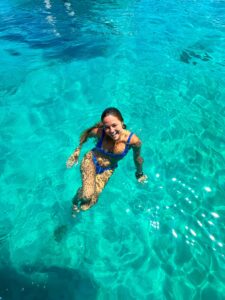
Swimming directly inside the caves during the boat tour is generally not permitted — for obvious safety reasons with multiple boats manoeuvring in confined spaces. However, swimming in the waters around the Blue Grotto from a private boat is possible and excellent — the clarity and colour of the water are as extraordinary from inside it as they look from above.
Wied iż-Żurrieq harbour itself is also an excellent swimming spot. The inlet — a narrow fjord-like channel cut into the limestone cliffs — has deep, clear water that is extremely popular with local families in summer. The rock faces of the inlet are good for snorkelling, with visibility that regularly exceeds 15 metres on calm days.
Snorkelling on a Private Boat Tour — The Full South Malta Experience
On our private boat tours from Marsaxlokk, the snorkelling experience goes significantly further than anything the standard tour offers.
Rather than entering the caves themselves, we anchor just outside the cave entrances in the shallow, crystal-clear blue sections where the water colour is at its most vivid — the cave glow visible through the water, the limestone reef below clearly visible, and the full diversity of south Malta’s marine life around you. This outside-the-cave snorkel gives you the Blue Grotto from an angle that almost no visitor ever experiences — in the water, at the cave entrance, looking into the illuminated interior from below the surface.
Furthermore, the private boat tour includes multiple snorkel and swim stops along the full south Malta coastline, not just the Blue Grotto. The full route covers:
- St Peter’s Pool — the horseshoe limestone rock pool with extraordinary water clarity and rich reef life along the cliff base. One of the finest snorkelling spots in south Malta
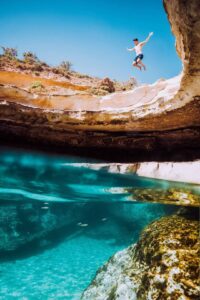
- Il-Ħofra il-Kbira — the larger of the two natural lagoons along the Delimara coastline. Almost entirely unvisited, exceptionally clear water, and a reef system that has never been disturbed by significant tourist traffic
- Il-Ħofra iż-Żgħira — the smaller and even more secluded natural lagoon, where the absence of visitors means the marine life behaves as if humans do not exist
- The Blue Grotto cliff base — snorkelling in the open water just outside the cave entrances in the shallow crystal sections where the blue colour is most intense
Each stop is different in character. St Peter’s Pool is open and dramatic, with cliff diving ledges above. Il-Ħofra il-Kbira is enclosed and tranquil, more like a natural swimming pool than an open bay. The Blue Grotto approach is extraordinary for the colour and the cave context. Together they give you the complete picture of south Malta’s coastline from the water — something no land-based visit can replicate.
Snorkelling — What You Will See
The waters around the Blue Grotto and the south Malta coastline support some of the richest marine life in the island’s waters:
- Large shoals of sea bream and mullet — in open water between the reefs
- Barracuda — common along the East Reef and the deeper sections
- Cuttlefish — particularly in the channel toward the Blue Grotto caves, especially in spring
- Damselfish, wrasse, and painted comber — in large numbers around every rocky section
- Moray eels and octopus — in the rock crevices along the cliff base
- Nudibranchs and scorpionfish — for the patient and observant snorkeller
The water clarity in this area is exceptional. Malta’s southwest coast is among the clearest in the island’s waters — protected from the prevailing northerly winds, free from river sediment, and far from the development pollution that affects the busier northern bays. On a calm day, visibility regularly exceeds 15 metres throughout the route.
💡 Local Tip: The best snorkelling on the south Malta private boat circuit is consistently at Il-Ħofra il-Kbira — the larger natural lagoon between St Peter’s Pool and the Blue Grotto. The reef here is undisturbed and the water clarity is remarkable. Most visitors have never heard of it. Consequently, you will almost certainly have it completely to yourself.
Contact us here to book the south Malta private boat tour from Marsaxlokk — launching May 2026.
Diving at the Blue Grotto — The Um El Faroud and the Reefs
The waters around Wied iż-Żurrieq and the Blue Grotto are among the finest diving locations in Malta — and Malta is one of the finest diving destinations in the entire Mediterranean.
The Um El Faroud Wreck
The centrepiece of Blue Grotto diving. The Um El Faroud is a 10,000-tonne Libyan oil tanker that was scuttled off Wied iż-Żurrieq in September 1998 to create an artificial reef and diving site. The wreck is 110 metres long, sits upright on a sandy bottom, and has a maximum depth of 36 metres with the top of the wreck at approximately 18 metres.
The wreck lies at approximately 35 metres. It truly is a great dive, suitable for more experienced divers. In addition, there are two other dive locations: the East Reef of Wied iż-Żurrieq, a single line reef going 300 to 400 metres east of the entry point and a great place to see shoals of fish, barracuda, cuttlefish, damselfish, red mullet, cardinalfish, moray eels, and scorpionfish. There is also the West Reef, which displays a variety of different areas with various drop-offs, ledges, and boulders surrounded by seagrass and sandy areas. maltauncovered
The wreck has been fully prepared for diving — all doors and windows removed, entry and exit holes cut throughout the structure. The bridge hatches, cabins, and stairs to the engine room are all accessible. The rudder and propeller remain intact. Following a heavy storm in 2005, the wreck broke in two — the stern section settling slightly deeper than the bow. Both sections remain stable and accessible.
Inside the wreck, marine life is extraordinary: large bream, barracuda, triggerfish, parrotfish, nudibranchs, octopus, squid, and the beautiful damselfish that colonise every surface. The wreck is also excellent for night diving — the artificial reef has accumulated a bioluminescent marine community that comes alive after dark.
Depth: 18 metres to top of wreck, 36 metres to seabed. Suitable for experienced recreational divers. Strong currents in the area — do not dive alone or without local knowledge.
East Reef
East Reef is a wall dive with maximum depth over 30 metres, often with excellent visibility and lots of marine life. Maltadives The reef runs approximately 300 to 400 metres east of the harbour entry point along a wall formation that drops away sharply. Barracuda, large grouper, and dense shoals of sea bream are consistently seen here.
West Reef and Caves
West Reef has drop-offs, ledges, gullies, boulders, and two caves, one named Bell Tower Cave, surrounded by seagrass and sandy areas. Maltadives The cave systems on the West Reef add a dimension to the diving that the other sites lack — the Bell Tower Cave in particular is large enough to swim through with good visibility and is one of the more dramatic cave dive experiences available in south Malta.
Practical Notes for Divers
- Access: Multiple dive centres in Malta organise guided dives to Um El Faroud and the reefs. Local centres operate from Wied iż-Żurrieq itself
- Currents: The area is known for strong currents. Do not dive alone or without local knowledge and briefing
- Boat traffic: The area around the Blue Grotto has boat traffic from the tourist tours. Be aware of boats when surfacing
- Visibility: Typically excellent — 15 to 25 metres on good days
Beyond the Caves — Things to Do Near the Blue Grotto
Ħaġar Qim and Mnajdra Temples — UNESCO World Heritage
Just 5 minutes by car or 25 minutes on foot from the Blue Grotto — but separated from it by 5,000 years of human history — are the megalithic temples of Ħaġar Qim and Mnajdra.
These temples were built between 3600 and 3200 BC — making them older than Stonehenge, older than the Pyramids of Giza, and among the oldest free-standing structures on earth. They were built by a civilisation about whom almost nothing is known — no writing survives, no confirmed name, only the extraordinary precision of the stonework they left behind.
The Mnajdra temple is particularly remarkable for its astronomical alignment — on the spring and autumn equinoxes, the rising sun shines directly through the temple doorway and illuminates the interior precisely. On the solstices, the sun illuminates the edges of specific stones in the outer wall. The builders of this temple, 5,500 years ago, had an understanding of astronomical cycles that remains impressive by any standard.
A single ticket gives access to both temple complexes. Budget approximately two hours. The protective tent covers above the temples are not pretty but they preserve the structures against the Maltese weather. Do not miss the small onsite museum which displays artefacts found at the site including the famous sleeping figure (a copy — the original is in Valletta’s National Museum of Archaeology).
💡 Local Tip: Visit the temples first — before the boat tour — to catch the morning light on the limestone. The temples look extraordinary in early morning sun before the tourist coaches arrive. Then descend to Wied iż-Żurrieq for the boat tour at 09:00.
Wied iż-Żurrieq Village — The Departure Harbour
The village of Wied iż-Żurrieq is worth exploring in its own right beyond the boat tour. The narrow inlet — cut through the limestone cliffs like a natural canal — is one of the most distinctive harbours in Malta. Traditional colourful boats sit on the water. The rock walls of the inlet rise on either side. Local families swim here on summer afternoons.
Several restaurants and cafes in the village serve fresh seafood, coffee, and simple local food. Cassarini Restaurant is the more upscale option with a sea view terrace. The Blue Cave Bar and Restaurant is the casual choice directly by the water — pizza, pasta, and cold Cisk lager.
Filfla — The Island You Can See But Not Visit
Visible from the viewpoint, from the boat tour, and from the surrounding cliffs — Filfla is a small uninhabited rocky island approximately 5 kilometres offshore, directly opposite the Blue Grotto. It is a protected bird sanctuary and access is restricted.
Filfla has an unusual history. During the British colonial period, the island was used as a bombing and artillery practice range by the Royal Navy and Royal Air Force — a fact that explains why the island’s surface is pocked with craters still visible today. The practice was stopped in 1971 and the island was subsequently designated a nature reserve.
Today Filfla is home to significant breeding colonies of Cory’s shearwaters and storm petrels, as well as an endemic subspecies of the wall lizard — the Filfla wall lizard (Podarcis filfolensis filfolensis) — found nowhere else on earth.
Ghar Lapsi — The Alternative
Ghar Lapsi — just a few kilometres east along the south Malta coastline — is a smaller, quieter, and less visited natural swimming area with excellent snorkelling, a small dive centre, and a local restaurant. It is significantly less crowded than the Blue Grotto area and offers a genuinely local atmosphere. Worth combining with a Blue Grotto visit for a full south Malta day.
Combining the Blue Grotto With South Malta
The Blue Grotto sits at the centre of one of the most rewarding day circuits in Malta. Here is the ideal order:
09:00 — Ħaġar Qim and Mnajdra Temples Start at the temples in the morning light. Two hours is enough for a proper visit with the audio guide.
11:00 — Blue Grotto Viewpoint Drive 5 minutes to the clifftop viewpoint. Morning photographs of the arch. Then descend to Wied iż-Żurrieq for the boat tour.
11:30 — Boat Tour The blue light is still excellent at this hour. Buy your ticket, join the queue, take the tour.
13:00 — Lunch at Wied iż-Żurrieq Fresh seafood at Cassarini or a casual meal at the Blue Cave Bar. The harbour makes an excellent lunch setting.
14:30 — Marsaxlokk Drive 20 minutes east to Malta’s most famous fishing village. The harbour, the luzzu boats, the waterfront walk. Tas-Sajjied restaurant for fish or Tartarun for something more refined.
17:00 — St Peter’s Pool End the afternoon at the natural limestone rock pool on the Delimara peninsula — cliff jumping, snorkelling, or simply lying on sun-warmed limestone watching the sea. The finest end to a south Malta day.
For the complete south Malta itinerary including Marsaxlokk, read our 3-day Malta itinerary guide. For the complete St Peter’s Pool guide, check out our complete St Peter’s Pool Malta guide.
Private Boat Tours to the Blue Grotto — Malta Blue Grotto (Launching May 2026)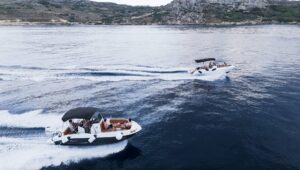
Here is the development that changes the Blue Grotto experience entirely.
Malta Blue Grotto is launching a private boat tour service from south Malta in May 2026 — operating from Marsaxlokk and covering St Peter’s Pool, the natural lagoons of Il-Ħofra il-Kbira and Il-Ħofra iż-Żgħira, and the Blue Grotto itself in a single day.
What Private Boat Access Adds
The traditional boat tour takes you through the caves from inside Wied iż-Żurrieq in a small shared boat for 20 minutes. The private boat tour gives you something completely different:
- Approach from the open sea — the Blue Grotto arch seen from open water, its full 30-metre height visible against the cliff face in a way impossible from the harbour approach
- Swimming near the caves — anchored in open water adjacent to the cave entrances, in extraordinarily clear water that the tour boats never reach
- The complete south Malta coastline — St Peter’s Pool, the hidden lagoons, the cliff formations around Delimara Point, and the Blue Grotto all in one day
- No queuing, no sharing, no fixed schedule — your boat, your day, your pace
Register your interest in the Malta Blue Grotto private boat tours here — launching May 2026.
For private boat tours covering the north Malta coastline, Blue Lagoon, and Comino from Cirkewwa, book with Outdoor Explorers Malta here. | And for tours departing from I Malta Boat Trips, see all tour options here.
Photography Guide — The Blue Grotto Malta
The Clifftop Shot
The iconic viewpoint photograph — the full arch visible against the open sea with Filfla in the background — is best taken in the morning when the sun illuminates the front of the arch. Use a wide angle lens to capture the full scale. A polarising filter cuts the sea glare and makes the water colours significantly more vivid.
On the Boat Tour
- Sit on the right side on the way out for the best approach shots of the cave entrances
- Inside the caves — go manual or use exposure compensation (+0.7 to +1.3) to prevent the bright reflected water from tricking the camera into underexposure
- Shoot in RAW for maximum flexibility in editing the blue tones
- Inside the main grotto, point the camera at the water surface from above — the luminous blue from below is most vivid captured straight down
The Water Level Shot
From a private boat, the view of the cave entrance at water level — looking directly into the illuminated cave interior from outside — produces a composition that no clifftop viewpoint or standard tour boat can achieve. The contrast between the dark cave exterior and the glowing blue interior, framed by the cliff faces on either side, is one of the most dramatic natural compositions available anywhere along the Maltese coastline.
Practical Tips — What to Know Before You Go
- Bring cash — the boat tours are cash only. Have euros ready before you arrive
- Wear sensible shoes — the path down to Wied iż-Żurrieq is steep. Flip flops are fine for the boat but you will want grip on the descent
- Go early — before 10:00 for the best light and the shortest queues
- Check weather — tours only run in calm seas. Check the forecast the evening before. Strong south winds or swell cancel the tours
- Sun cream and hat — Wied iż-Żurrieq has limited shade. The sun is intense in summer
- Accessibility — the clifftop viewpoint is accessible. The boat tour is not suitable for those with significant mobility issues due to the steep path and the requirement to step into small boats from a ramp
- Facilities — public toilets available in Wied iż-Żurrieq (small fee). Several restaurants and cafes. No facilities on the boat or in the caves
- Sea sickness — the tour is short (20–25 minutes) but the sea can be choppy as you leave the shelter of the inlet. If you are prone to seasickness, take precautions before boarding
Frequently Asked Questions — Blue Grotto Malta
What is the Blue Grotto Malta?
The Blue Grotto Malta is a system of seven sea caves on Malta’s southwest coast near Wied iż-Żurrieq. The caves are famous for their vivid phosphorescent blue water, created when sunlight enters through underwater openings in the cave floor, hits the white limestone seabed, and reflects upward through the water. The official Maltese name is Taħt il-Ħnejja — Under the Arch.
How much does the Blue Grotto boat tour cost?
€10 for adults and €5 for children. The tour lasts approximately 20 to 25 minutes. Cash only — bring euros before you arrive as card payments are not always available.
What is the best time to visit the Blue Grotto Malta?
Morning — specifically before 13:00. The most vivid blue occurs when the morning sun sends light through the underwater cave floor openings at the correct angle. Before 10:00 gives you the best light combined with the fewest crowds. The effect fades through the afternoon.
Can you swim at the Blue Grotto Malta?
Yes — in Wied iż-Żurrieq harbour, which has deep, clear water extremely popular with local families. Swimming directly inside the caves from the tour boats is not permitted. From a private boat anchored near the cave entrances, swimming in the open water adjacent to the caves is excellent. The water clarity in this area is exceptional.
How do I get to the Blue Grotto Malta by bus?
Take bus route 74 from Valletta to the “Panorama” stop — then walk approximately 15 minutes downhill to Wied iż-Żurrieq harbour. From Sliema or St Julian’s, take any bus to Valletta first and transfer to route 74. From the airport, take X1, 41, 42, 49, or 250 to Valletta then route 74.
Is the Blue Grotto boat tour worth it?
Yes — unequivocally yes, if you go in the morning. The experience of being inside the cave with the electric blue water glowing below the boat is genuinely extraordinary and cannot be replicated from the clifftop viewpoint. Go before 11:00 for the most vivid light.
Can you dive at the Blue Grotto Malta?
Yes — the area around Wied iż-Żurrieq is one of Malta’s premier dive locations. The Um El Faroud wreck (10,000-tonne oil tanker scuttled 1998, maximum depth 36 metres) is the headline site. Additionally, the East Reef and West Reef offer wall and cave diving of excellent quality. Suitable for experienced divers — strong currents in the area.
What is the Um El Faroud?
The Um El Faroud is a 10,000-tonne Libyan oil tanker that was scuttled in September 1998 off Wied iż-Żurrieq to create an artificial reef and dive site. The wreck is 110 metres long, sits upright on the seabed at 36 metres depth, and has been fully prepared for diving with all openings and exits cut. An explosion in 1995 killed nine dockworkers at Grand Harbour before the vessel was repaired and subsequently scuttled. Today it is one of the finest wreck dives in the Mediterranean.
What other caves are at the Blue Grotto Malta?
The seven caves include the main Blue Grotto (Taħt il-Ħnejja), Honeymoon Cave, Cat’s Cave, Reflection Cave, and the Elephant Foot formation, plus two additional caverns. Each has a distinct character, size, and variation of the blue light effect depending on its orientation, underwater geometry, and mineral content of the walls.
Are the temples near the Blue Grotto Malta worth visiting?
Ħaġar Qim and Mnajdra temples are 5 minutes by car from the Blue Grotto — older than Stonehenge, older than the Pyramids, UNESCO World Heritage listed, and genuinely one of the most remarkable ancient sites in Europe. A single ticket covers both. Do not visit the Blue Grotto without giving at least 90 minutes to the temples.
Is there a private boat tour to the Blue Grotto Malta?
Yes — Malta Blue Grotto is launching private boat tours from Marsaxlokk in May 2026, covering St Peter’s Pool, the natural lagoons, and the Blue Grotto coastline. Contact us to register your interest. For north Malta and Comino private boat tours, book with Outdoor Explorers Malta here.
What films were shot at the Blue Grotto Malta?
The Blue Grotto has been used in productions including Hell Boats, Troy, the 25th season of The Amazing Race, and Cadbury Milk Tray chocolate adverts, among other smaller commissions. Wikipedia
Is the Blue Grotto open in winter?
Yes — the caves are accessible year-round and boat tours operate weather permitting in every month. However, rough winter weather can close the tours for extended periods. A calm winter morning at the Blue Grotto — almost entirely alone — is one of the most atmospheric experiences available in south Malta.
Book Your Blue Grotto Malta Experience
Traditional boat tour — from the harbour at Wied iż-Żurrieq. €10 adult, €5 child. Cash only. No booking required — join the queue at the ticket booth. Go before 10:00.
Private boat tour from south Malta — Malta Blue Grotto, launching May 2026. St Peter’s Pool, the natural lagoons, and the Blue Grotto coastline in one day. Contact us here to register your interest.
Private boat tours from north Malta and Comino — Outdoor Explorers Malta, departing Cirkewwa. Blue Lagoon, Crystal Lagoon, Comino sea caves, northwest Malta coastline. Book here.
I Malta Boat Trips — full range of private tours covering all of Malta’s coastline. See all tours here.