


5 Days in Malta — The Ultimate Itinerary from a Local (2026)
Five days is the sweet spot for Malta.
Long enough to cover the highlights without rushing. Short enough to stay focused on the best of what these islands genuinely offer. In five days, you can experience Valletta, Comino, the Blue Lagoon, south Malta, Gozo, Mdina, and the Three Cities — the full picture of the Maltese archipelago, done properly.
This itinerary comes from the team at Outdoor Explorers Malta — a family-run boat tour company based in Gozo and Malta since 2016. Every day, we are on these islands. What follows is the honest version of what to do, where to stay, what to eat, what to pack, and what most tourists miss entirely.
How Many Days Do You Need in Malta?
The minimum for a meaningful visit is 4 to 5 days. Three days is possible but rushed — you would have to choose between Gozo and Mdina, and both deserve proper time. With five days, however, you cover everything comfortably.
Six or seven days is even better. Gozo alone could fill two full days — it is a completely different island from Malta, quieter and wilder, with coastline that rewards exploration. Extra days also give flexibility around weather, which matters particularly if a Blue Lagoon boat tour is on your list.
Where to Stay in Malta for 5 Days
The Best Base — Sliema or St Julian’s
For most first-time visitors, Sliema or St Julian’s is the best base — central, well-connected, and within easy reach of Valletta, Cirkewwa in the north (for the Blue Lagoon boat tour), and the south coast. Both areas have a wide range of hotels, apartments, and restaurants at all price points.
Sliema is slightly calmer and more residential. St Julian’s, by contrast, is Malta’s entertainment hub — restaurants, bars, and Paceville nightlife all within walking distance. Choose based on what your evenings look like.
One or Two Nights in Gozo
Here is the recommendation most travel guides don’t make: spend at least one night in Gozo. The island is completely different after the day-trippers leave — quieter, darker, more atmospheric, and genuinely beautiful in the evening. Staying overnight gives you the morning for the Gozo coastline before anyone else arrives.
The best areas to stay in Gozo are Marsalforn — a small bay on the north coast, charming and walkable — and Xagħra, a hilltop village in the centre of the island with easy access to everywhere. Both are excellent bases for exploring Gozo properly.
Booking Accommodation
Booking.com and Airbnb both offer excellent options across Malta and Gozo at all price points. In peak summer (July to August), book at least 6 to 8 weeks in advance — particularly for Gozo, where availability is more limited. Shoulder season (May, June, September, October) gives you more flexibility and significantly better prices.
💡 Local Tip: Split your trip — 3 nights in Sliema or St Julian’s and 2 nights in Gozo. This gives you a proper base on the Malta side for Valletta and south Malta, and a proper Gozo base for the island and the evening atmosphere that overnight visitors get to experience.
How to Get Around Malta
Rent a Car
Renting a car is, without question, the most practical way to explore Malta and Gozo. Public transport exists but is slow — a journey that takes 15 minutes by car can take 45 minutes or more by bus. For the south Malta circuit on Day 3 in particular, a car makes an enormous difference.
Car hire in Malta is affordable and widely available. Drive on the left side of the road (Malta follows the UK system). Roads are generally good, though some village streets are narrow. Additionally, parking in Valletta can be challenging — use the park and ride at the city limits and walk in.
The Gozo Ferry
The Gozo ferry from Cirkewwa in northern Malta runs 24 hours a day, 7 days a week — one of the few things in Malta that truly never stops. The crossing takes approximately 25 minutes. Fares are charged on the return journey only — going to Gozo is free. For the Day 4 Gozo trip, simply drive onto the ferry at Cirkewwa.
Public Transport — Honest Assessment
Malta’s bus network covers most of the island and is cheap. However, services can be infrequent and slow, particularly to south Malta and the north. For Valletta — which is better explored on foot — the bus is fine. For everything else, a car or taxi or Bolt app is more practical.
How Much Does 5 Days in Malta Cost?
Rough Daily Budget
- Budget traveller: €60–€80 per day — hostel or cheap accommodation, public transport, local restaurants
- Mid-range: €120–€180 per day — hotel or Airbnb, car hire shared between group, good restaurants
- Comfortable: €200–€300+ per day — boutique hotel, private tours, fine dining
The Boat Tour — Best Value on the Trip
The private boat tour to the Blue Lagoon is the biggest single spend of the trip — and the most worthwhile. Prices start from €199 for a 2-hour tour for up to 6 people (approximately €33 per person in a group of 6). The 3-hour tour — which covers the full Comino circuit including sea caves — is €289 for the boat. Split between a group, this represents exceptional value for the experience delivered.
For the full tour options and pricing, see all private boat tours here.
Food and Drink — What to Budget
- Pastizzi at Serkin Bar, Rabat: €0.50–€1 — the cheapest and best snack in Malta
- Lunch at a local restaurant: €12–€20 per person
- Dinner at a good restaurant: €25–€45 per person
- Blue Lagoon pineapple cocktail: €10 with alcohol, €8 virgin
- Coffee: €1.50–€2.50
💡 Local Tip: Malta is significantly cheaper than most Western European destinations. A good meal with wine for two rarely exceeds €60–€70 outside of fine dining venues. Consequently, the overall cost of a Malta trip tends to pleasantly surprise visitors from the UK, Germany, and Scandinavia.
Day 1 — Valletta: Europe’s Smallest Capital
Start in Valletta. Despite being the smallest capital city in the European Union — just 700 metres long and 300 metres wide — it packs five centuries of extraordinary history into its limestone streets. A full morning barely scratches the surface, so begin early and move at your own pace.
St John’s Co-Cathedral
Begin here — this is one of the most extraordinary Baroque interiors in Europe. Every inch of the interior is covered in carved limestone, gilded detail, and individually designed tombstones of the Knights of Malta inlaid into the floor. Caravaggio’s largest painting — The Beheading of Saint John the Baptist — hangs in the oratory.
The exterior of St John’s is deliberately plain — the Knights did not want to signal their wealth to enemies approaching by sea. Inside, however, it is overwhelming in the best possible way. Book tickets in advance, particularly in summer, as queues can be long.
The Palace Armoury
Inside the Grand Master’s Palace on Republic Street sits one of the finest collections of medieval and Renaissance armour in the world — suits built for individual Knights of Malta, many custom-fitted and bearing the personal insignia of their owners. The armoury is surprisingly large, well-preserved, and genuinely fascinating even for visitors with no particular interest in military history.
Fort St Elmo and the War Museum
At the tip of the Valletta peninsula stands Fort St Elmo — the fort that held back the Ottoman siege of 1565 in one of the most dramatic military episodes in Mediterranean history. The Great Siege lasted from May to September 1565, and Fort St Elmo was at the heart of it.
The National War Museum inside covers Malta’s experience in World War II, including the George Cross awarded to the entire island by King George VI in 1942 — one of the only times a nation rather than an individual has received the decoration. It is moving, well-curated, and gives essential context to understanding modern Malta.
The Barrakka Gardens and the Grand Harbour
The Upper Barrakka Gardens sit above the Grand Harbour and offer one of the most dramatic viewpoints in the Mediterranean — the Three Cities directly across the water, the Grand Harbour stretching below. The noon cannon fires from here daily at 12:00 — position yourself on the garden terrace a few minutes before for the full theatrical effect.
Fewer tourists find Hastings Gardens on the western bastion. The views from there overlook Marsamxett Harbour and the skyline of Sliema in the other direction. Quieter, shadier in the afternoon, and equally beautiful — a good alternative if the Barrakka is busy.
The Streets of Valletta
Valletta’s grid of streets rewards wandering without a map. Republic Street and Merchant Street are the main arteries — lined with baroque palazzos, churches, and cafes. Side streets drop steeply toward the harbour walls, revealing hidden squares, neoclassical doorways, and the distinctive coloured Maltese balconies that have been photographed by visitors for two centuries.
The Valletta Market near the city gate is worth visiting — fresh produce, local cheese, Maltese sausage (zalzett), and some excellent pastry options. Crucially, this is where Valletta locals shop, not tourists.
Where to Eat in Valletta
For dinner in Valletta, the restaurants around St George’s Square offer good options at various price points. For a genuinely local experience, seek out a trattoria serving traditional Maltese dishes — braġioli (beef olives), stuffat tal-fenek (rabbit stew), or aljotta (fish soup) are the dishes to order if they are on the menu.
The Valletta covered market also has evening food stalls worth exploring. Additionally, the waterfront below Barrakka Gardens has several restaurants with harbour views — more expensive but genuinely atmospheric at dusk.
💡 Local Tip: Visit Valletta on a Sunday morning if possible. The city is quieter, the cathedral is most atmospheric after morning mass, and the market is at its most vibrant. Fewer tour groups arrive before 10:00 on Sundays.
Day 2 — The Blue Lagoon and Comino by Private Boat
Day 2 is the highlight. This is, consistently, what guests tell us was the best day of their Malta trip — and the earlier in your visit you do it, the more it sets the tone for everything that follows.
Why a Private Boat Makes All the Difference
The ferry drops 200 people onto a crowded beach. A private boat, by contrast, anchors in open water away from the shore — in deeper, more vivid, and dramatically less crowded water than anything accessible from land. Same Blue Lagoon. Completely different experience.
Furthermore, the private boat does not stop at the Blue Lagoon alone. Depending on your chosen duration, it covers Crystal Lagoon, Lovers Cave, Popeye Cave, Alex Cave, Cominotto, and multiple swim stops — all the places the ferry never reaches.
What the Tour Covers
- Blue Lagoon — anchored in open turquoise water, swimming directly from the boat
- Crystal Lagoon — deeper and more vivid than the Blue Lagoon, outstanding snorkelling around Popeye Cave
- Lovers Cave — 40 metres deep into the cliff with a 12-metre hidden sandy beach inside, filming location for The Count of Monte Cristo
- Popeye Cave — the cave where the 1980 Robin Williams film was shot; extraordinary light inside
- Alex Cave — has an air pocket inside and is home to resident damselfish
- Cominotto — the tiny uninhabited islet directly across from the Blue Lagoon, accessible only by private boat, white sand, remarkable snorkelling
- Everything included — snorkelling gear, life jackets, pool noodles, floaties, cool box with ice, shade canopy, toilet on board
The Pineapple Cocktail
Sold on shore and from a boat moving through the lagoon, the pineapple cocktails are served inside a real hollowed pineapple. €10 with alcohol, €8 virgin, €5/€4 for refills. Mojito, Sex on the Beach, Cosmopolitan, Long Island Iced Tea, and Piña Colada are among the options. On our private tours, your skipper can arrange delivery to the boat — you get the cocktail without leaving the water.
Blue Lagoon Reading — Everything You Need to Know
Before your boat tour, these guides cover everything:
- Blue Lagoon Malta — Complete Guide 2026
- Blue Lagoon Malta Tickets and Access Pass 2026
- Blue Lagoon Malta FAQ — Every Question Answered
- How to Get to the Blue Lagoon Malta — 6 Ways Ranked
- Is the Blue Lagoon Malta Worth It? Honest Answer
Alternatives and Add-Ons
For the adventurous, the 2-hour jet ski safari covers the entire Comino circuit at speed — no licence required, extraordinary views of the sea caves and coastline from a completely different perspective.
Alternatively, those who want complete freedom can opt for the self-drive boat rental — no skipper, no schedule, explore at your own pace for a half or full day. Previous boating experience is recommended.
Where to Eat Around the Boat Tour
Before the tour, One80 Restaurant in Mellieħa sits on the hillside above the bay with panoramic views — excellent food and an easy 10-minute drive from Cirkewwa. After the tour, if heading back via Gozo, Sammy’s Kitchen (Ta’ Karolina) at Mġarr Harbour is where the fishermen and locals eat after a morning on the water — fresh fish, harbour views, genuinely Gozitan atmosphere.
💡 Local Tip: Book the earliest departure available — 08:00 or 09:00 from Cirkewwa. You reach the Blue Lagoon before the ferry crowds arrive and experience the lagoon at its most extraordinary. Dolphins are most commonly spotted in the channel before 09:00 — our team sees them roughly once or twice a week on early departures.
👉 Book your private Blue Lagoon boat tour with Outdoor Explorers Malta here.
Day 3 — South Malta: Marsaxlokk, St Peter’s Pool and the Blue Grotto
South Malta is the side of the island most tourists miss entirely. It is quieter, wilder, and more authentically Maltese than the tourist corridors of the north. A full day here covers three completely different experiences — a fishing village market, a dramatic natural sea pool, and a cave system lit by extraordinary blue light.
Marsaxlokk — Malta’s Fishing Village
Marsaxlokk is Malta’s most famous fishing village — and on a Sunday morning, it is one of the most genuinely Maltese experiences on the island. Colourful traditional luzzu boats fill the harbour, their hand-painted eyes watching the water as they have for centuries.
The Sunday market runs along the entire waterfront — fresh fish directly from the morning’s catch, local produce, honey, ftira bread, and souvenirs. Even outside Sunday, the village is worth visiting for the harbour atmosphere and the quality of the seafood restaurants lined up along Xatt is-Sajjieda.
Where to Eat in Marsaxlokk
Tas-Sajjied Restaurant on the waterfront is the recommendation that locals give. Fresh fish from the boats that morning, simply cooked, at tables overlooking the harbour. The format is essentially: tell the waiter you want fish, ask what is fresh, and trust the kitchen. Octopus braised in tomato and garlic is worth ordering if available — one of the genuinely great simple pleasures of eating in the south of Malta.
Additionally, Tartarun — further along the same waterfront — offers a more refined fish dining experience with an exceptional wine list of over 150 bottles. It is seasonal-driven, locally caught, and consistently rated among the best fish restaurants in Malta. Book in advance for either.
💡 Local Tip: Order the catch of the day and ask the waiter what is best rather than studying the menu at length. Marsaxlokk restaurants serve what has been caught that morning — the menu is the sea, not the kitchen.
St Peter’s Pool
A short drive from Marsaxlokk, St Peter’s Pool is a natural limestone swimming area carved by the sea into Malta’s dramatic southern coast. No beach, no facilities, no development — just flat rock, deep clear water, and cliff diving from limestone ledges at various heights.
The walk from the car park takes approximately 15 minutes across open limestone. As a result, good footwear is essential — and sunscreen, as the rock reflects heat significantly. The surrounding coastal landscape rewards exploration beyond the main pool, and the sea caves visible from the surface are worth investigating.
The Blue Grotto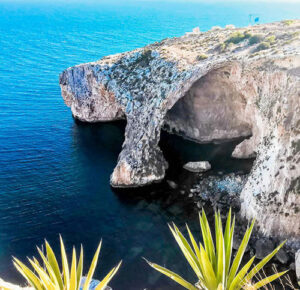
The Blue Grotto is a series of sea caves on Malta’s southwestern coast — famous for the extraordinary blue light that illuminates the cave interiors from the white sandy seabed below. Small traditional boats take visitors through the cave system from the village of Wied iż-Żurrieq.
Morning visits offer the most vivid light — the sun angle in the morning hours is ideal for the blue reflection effect inside the caves. Afternoon visits are still worthwhile, though the light is less dramatic. The boat ride is short but genuinely memorable.
💡 Local Tip: Combine St Peter’s Pool and the Blue Grotto in the same afternoon — they are approximately 10 minutes apart by car. Consequently, visiting both on the same trip is easy and the contrast between the open swimming pool and the enclosed cave system makes for a genuinely varied afternoon.
Day 4 — Gozo: The Wilder Island

Gozo deserves a full day — ideally, as mentioned earlier, with an overnight stay. It is a completely different experience from Malta — quieter, greener, more dramatic, and less developed. Many visitors who go for a day wish they had stayed longer.
Getting to Gozo
Drive to Cirkewwa and take the Gozo ferry — the crossing takes approximately 25 minutes and runs throughout the day. On Gozo, a rental car is the best way to explore — the island is small but the roads are narrow, and some of the best spots are not served by public transport.
Mġarr ix-Xini
One of the most beautiful inlets on the Gozo coast — a narrow fjord-like bay where Angelina Jolie filmed By the Sea in 2014. The bay is lined with limestone cliffs, has a 1661 watchtower at the entrance, and offers extraordinary swimming and diving including sea caves in the cliff faces. CNN listed it as one of the top 10 places to visit before they change forever.
Xlendi Bay
A charming small bay on the southwest coast — restaurants on the waterfront, sea caves to explore, a watchtower dating from 1650, and excellent diving including the Xlendi Underwater Archaeological Park — the world’s first deep-water underwater archaeological park featuring a Phoenician shipwreck from the 7th century BC.
Dwejra and the Azure Window Site
The Azure Window collapsed in 2017 during a storm, but the surrounding landscape at Dwejra remains extraordinary — dramatic collapsed sea cliffs, the Inland Sea, and one of the best diving sites in Malta at the Blue Hole just offshore. Well worth visiting even without the arch.
Marsalforn Salt Pans
On Gozo’s north coast, the ancient salt pans carved into the limestone are one of the most distinctive sights on the island — geometric pools cut into the rock by hand, still in use today. The coastal walk from Marsalforn along the salt pans is one of the most rewarding short walks in the Maltese islands.
Where to Eat in Gozo
Two restaurants stand out above all others in Mġarr Harbour — and they serve different purposes.
- Il-Kartell Restaurant, Mġarr — the best pasta on the island. Simple, local, and consistently excellent. Order the rabbit (fenek) or the pasta with locally grown tomatoes. The menu is traditional Maltese — no fusion, no pretension. Gets busy, so arrive at opening time.
- Sammy’s Kitchen (Ta’ Karolina), Mġarr Harbour — for fish. Fresh catch from the harbour, simply prepared, at tables looking out over the water. If you are choosing between the two, the rule is simple: go to Il-Kartell for pasta, Sammy’s for fish.
Gleneagles Bar — The Best Local Bar in Gozo
Also known locally as Barakka, Gleneagles Bar sits right on Mġarr Harbour and has been there since the Knights era. Run by brothers Sammy and Tony, it is as genuinely local as bars get in the Maltese islands — no pretension, no tourist menu, just cold drinks, harbour views, and the kind of atmosphere that makes you understand why locals never leave.
After a full day on Gozo, sitting at Gleneagles Bar with a cold Cisk lager watching the ferry come in is one of the most genuinely Maltese experiences available to a visitor. Do not miss it.
💡 Local Tip: Visit Mġarr Harbour in the late afternoon before dinner. The 1948 Tragedy Monument, the Lourdes Chapel (built 1893), the Three Graces sculpture, and the Dghajsa Tal-Latini monument are all within a short walk. Then sit at Gleneagles Bar and watch the evening come in.
The Gozo Coastline by Boat
If you want to see the Gozo coastline properly, the best way is by private boat. Our 4-hour, 6-hour, and 8-hour private Gozo boat tours all depart from Mġarr Harbour and cover the south Gozo coast. Consider combining a Gozo overnight with a morning boat tour from Mġarr.
Day 5 — Mdina, Rabat and the Three Cities

Mdina Gates
The final day covers two of Malta’s most historically significant areas — Mdina, the Silent City, and the Three Cities across the Grand Harbour from Valletta. Together they complete the picture of Malta that the first four days have been building toward.
Mdina — The Silent City
Mdina was Malta’s capital before Valletta was built. A medieval walled city on a hilltop, it has no through traffic and very few permanent residents — which creates an extraordinary atmosphere of stillness, particularly in the early morning before the tour groups arrive.
The bastions offer panoramic views across the whole of Malta — on a clear day, you can see all the way to Gozo. The narrow streets inside are almost entirely unchanged from the medieval period. Palazzos with ornate doorways, a cathedral, convents, and tiny squares open unexpectedly from the labyrinth of lanes.
What to See in Mdina
- Mdina Cathedral — dedicated to Saint Paul, rebuilt after the 1693 earthquake. The interior is richly decorated and the tombs of the Grand Masters are remarkable
- Palazzo Falson — a medieval palace turned museum with an extraordinary collection of art, weapons, silver, and decorative objects. One of the best small museums in Malta
- The Bastion Views — walk the full circuit of the city walls for views in every direction across Malta
- The Silent Streets — simply walking without a map is the best approach. Every corner reveals something
Where to Eat in Mdina and Rabat
For pastizzi — Malta’s iconic flaky pastry filled with ricotta or mushy peas — Serkin Bar in Rabat (just outside Mdina’s main gate) is the authentic local choice. €0.50–€1 each. Fresh from the oven, consumed standing at the counter — this is where locals eat, not tourists.
For a proper sit-down meal, Bacchus Restaurant is outstanding. Housed in two chambers built by Grand Master Fra Martino De Redin between 1657 and 1660 — originally gunpowder magazines for the Mdina fortifications — it has been serving food for over 35 years. The stone arches, vaulted ceilings, and candlelit atmosphere make it one of the most beautiful dining rooms in Malta.
The menu features authentic Mediterranean cuisine — beef fillet, rabbit belly roulade, scallop ceviche, risotto dishes, and fresh seafood. The Maltese Caravaggio Chardonnay is worth ordering. Booking in advance is essential. The restaurant is on Triq Inguanez, the first left turn after entering Mdina’s main gate.
💡 Local Tip: Visit Mdina before 09:00 if at all possible. The streets are completely empty and the atmosphere is extraordinary — the limestone glows in the early morning light and the silence is genuinely striking. By 10:00 the tour groups start arriving and the magic fades somewhat.
The Three Cities — Birgu, Senglea and Cospicua
Directly across the Grand Harbour from Valletta, the Three Cities are older than Valletta itself. Most tourists skip them entirely. That is a significant mistake.
These fortified towns were built by the Knights of Malta before they constructed Valletta, and they retain a more local, less touristy atmosphere while offering the same quality of historical interest. The waterfront views back toward Valletta are among the best available anywhere in Malta.
What to See in the Three Cities
- The Inquisitor’s Palace, Birgu — one of the best-preserved Inquisition-era buildings in Europe. The cells, the courtrooms, and the private quarters of the Inquisitor are all intact. Genuinely fascinating and genuinely eerie
- Fort St Angelo — the fortress at the tip of Birgu that withstood the Great Siege of 1565. Views back across the harbour to Valletta are extraordinary
- The Maritime Museum, Birgu — Malta’s maritime history from the Knights to the present day, housed in the former British Naval Bakery
- The Waterfront Promenade — a quieter, more local version of Valletta’s waterfront, with excellent restaurants and one of the best views of the Grand Harbour
Evening — St Julian’s and Paceville
If you want one night out in Malta, St Julian’s and Paceville is where it happens. Malta’s entertainment hub — restaurants, bars, clubs, and a casino — all within walking distance along the seafront. Lively, social, and a genuinely fun evening if you are in the mood.
Spinola Bay in St Julian’s, just below Paceville, is the calmer option — waterfront restaurants, boat-lined harbour, and a pleasant evening atmosphere for those who prefer dinner over dancing. For a romantic dinner with panoramic views, One80 Restaurant in Mellieħa is worth the drive.
Malta Packing List — What to Bring
Essentials for Every Day
- High-factor sun cream — SPF 50 minimum. The Maltese sun is intense year-round and the limestone and water both reflect UV. Reapply every 2 hours
- Water shoes — for St Peter’s Pool, the Blue Lagoon rocky entry, and sea cave exploration. Rocky entries are common throughout Malta
- Hat and UV cover-up — essential for the boat tour, Blue Lagoon, and cliff walks. Shade at the Blue Lagoon is gone by 10:30am in peak summer
- Sunglasses — polarised lenses make a significant difference on the water
- Reusable water bottle — staying hydrated in the Maltese summer is important
For the Boat Tour
- Swimwear — pack more than you think you need. You will be in and out of the water multiple times
- Quick-dry towel — takes up less space in a bag
- Underwater camera or phone case — the snorkelling at the Blue Lagoon and Crystal Lagoon is genuinely photogenic
- Cash — for the Blue Lagoon food vendors and pineapple cocktails. Card acceptance is limited on Comino
- Your own food and drinks — the cool box on the boat keeps everything cold. Bringing your own saves money and gives you more choice
For Valletta and Mdina
- Comfortable walking shoes — Valletta’s streets are steep and the limestone can be slippery when wet
- A light layer — churches and cathedrals in Malta require covered shoulders and knees
- Cash — smaller restaurants, bars, and market vendors throughout Malta prefer cash
For Gozo
- Car hire booked in advance — availability in peak season is limited
- Snorkelling gear — if you have your own, Gozo’s coastline is extraordinary and having your own gear gives you freedom
- Full tank of petrol — petrol stations in rural Gozo close early
The 5-Day Malta Itinerary — Summary
- Day 1 — Valletta: St John’s Cathedral, Palace Armoury, Fort St Elmo and War Museum, Barrakka Gardens
- Day 2 — Blue Lagoon by Private Boat: Blue Lagoon, Crystal Lagoon, Lovers Cave, Popeye Cave, Cominotto — the highlight of the trip
- Day 3 — South Malta: Marsaxlokk market and Tas-Sajjied lunch, St Peter’s Pool, Blue Grotto
- Day 4 — Gozo: Mġarr ix-Xini, Xlendi, Dwejra, Marsalforn salt pans, Il-Kartell or Sammy’s for dinner, Gleneagles Bar
- Day 5 — Mdina, Rabat and Three Cities: Serkin pastizzi, Mdina silent streets, Bacchus dinner, Inquisitor’s Palace, Fort St Angelo
Before You Go — Practical Checklist
- Book the boat tour — early morning slots in peak summer fill quickly. Book here.
- Register for Blue Lagoon access pass — free, mandatory for going ashore. Register at www.blcomino.com
- Book accommodation — 6 to 8 weeks ahead in peak summer, especially in Gozo
- Book Bacchus Restaurant — fills up, particularly for dinner
- Book car hire — in advance for best price and availability
- Check weather — Malta is reliably sunny May to October, but wind can affect boat tour conditions. Our skippers check daily and will advise
Frequently Asked Questions — 5 Days in Malta
Is 5 days enough for Malta?
Yes — five days covers everything on this itinerary comfortably without rushing. You will see Valletta, take a private boat tour to the Blue Lagoon and Comino, explore south Malta, spend a full day on Gozo, and have time for Mdina and the Three Cities. Most visitors, however, leave wanting one or two more days — which is the best possible sign.
How many days do you need in Malta?
Five days is the ideal minimum for a first-time visitor. Three days is possible but requires choosing between major attractions. Six or seven days, moreover, allows a more relaxed pace and time to explore Gozo properly. Extending the trip to a week gives you time for the south Malta coast, the Three Cities, and Gozo without compromise.
What is the best month to visit Malta?
May, June, September, and October offer the best combination — warm weather, warm sea (20–27°C), and fewer crowds than peak July and August. September is particularly outstanding: water temperature at 27°C, visitor numbers well below peak, and golden light that makes every photograph look extraordinary.
What is the single best thing to do in Malta?
The private boat tour to the Blue Lagoon, Crystal Lagoon, and the Comino sea caves. Consistently, it is what guests tell us was the highlight of their Malta trip. Book here.
Is Gozo worth visiting from Malta?
Absolutely — Gozo is a completely different experience from Malta. Quieter, greener, and with a wilder coastline. The Gozo ferry from Cirkewwa takes approximately 25 minutes. A full day on Gozo, ending with dinner at Il-Kartell or Sammy’s Kitchen in Mġarr, is one of the best days available in the Maltese islands. Moreover, staying overnight gives you an experience most Malta tourists never get.
Where is the best place to stay in Malta for 5 days?
Sliema or St Julian’s for the Malta-side base — central, well-connected, and with good transport links. For Gozo, Marsalforn or Xagħra are excellent overnight options. Booking.com and Airbnb both offer a wide range of accommodation at all price points across both islands.
Do I need a car in Malta?
For Days 3 and 4 (south Malta and Gozo), a car makes the itinerary significantly easier and more enjoyable. For Valletta and the Blue Lagoon day, however, you can manage without one — Valletta is best explored on foot and the boat tour departs from Cirkewwa which is served by bus. Consequently, the most practical approach is to rent a car for 3 of the 5 days.
What is the best restaurant in Malta?
For fish: Tas-Sajjied in Marsaxlokk — harbour-fresh catch, waterfront setting, genuinely local. For fine dining: Bacchus Restaurant in Mdina — a 17th-century gunpowder magazine turned elegant dining room, Mediterranean cuisine, one of the most atmospheric restaurants in the country. For local Maltese food: anywhere in Marsaxlokk serving the daily catch, or a trattoria in Valletta serving rabbit stew.
👉 Book your private boat tour with Outdoor Explorers Malta here. | Contact us here.